



 Multinational Execs in China Must Act as Entrepreneurs, Siemens Healthineers Country President Says
(Yicai) April 14 -- Executives at multinational companies in China must not see themselves merely as "employees" but rather as entrepreneurs to effectively manage operations in the complex and ever-changing Chinese market, according to the country president of German healthcare equipment manufacturer Siemens Healthineers.
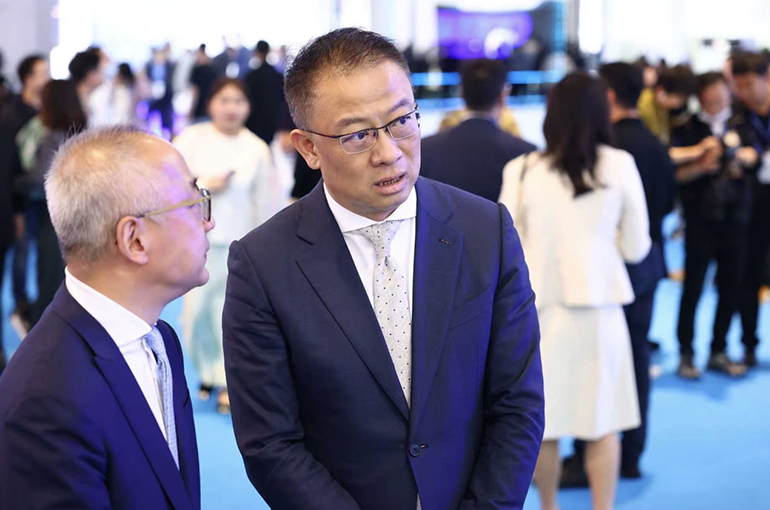
The most essential survival skill for chief executives of multinationals in China is to have an entrepreneurial spirit, Jerry Wang said in an interview with Yicai on the sidelines of the China International Medical Equipment Fair, which ended April 12. "You need to see yourself as an entrepreneur to achieve business breakthroughs."
The overall Chinese medical equipment industry is entering a phase of slowing growth, so multinational medical imaging firms are undergoing an adjustment period. Medical gear giants GE Healthcare, Siemens Healthineers, and Philips have seen various declines in China revenue over the past two years, with GE Healthcare and Philips also replacing their local CEO.
"When the market environment is favorable, China operation heads tend to follow the direction set by the headquarters," Wang said. "However, what we want to achieve often differs significantly from the HQ's ideas, so as managers of the Chinese market, we must act like entrepreneurs and take on responsibility and accountability in such situations."
China has become an innovation source for the global healthcare industry, which will fundamentally change the narrative for foreign companies in the country, Wang noted. "We used to talk about the rapid growth of the Chinese market, but now we are beginning to discuss how it can achieve high-quality development, with innovation being a crucial component of this transformation."
The rise of Chinese medical device makers, such as Shanghai United Imaging Healthcare and Shenzhen Mindray Bio-Medical Electronics, has attracted global attention in recent years, with the former's high-end medical imaging equipment already entering the global market. However, China still faces a gap in the development progress of original medical devices compared with advancements in innovative pharmaceuticals.
It may take some time for Chinese companies to see a significant emergence of source or first-in-class innovations in medical devices and equipment, Wang said, but added that the rise of domestic medical device makers has created a sense of pressure for multinationals.
Because the decision-making and execution of multinational firms often take place in different locations, communication costs among regions are higher, with an information gap, Wang pointed out. In comparison, local competitors have relatively centralized decision-making processes for production, research and development, innovation, sales, and after-sales service, a situation that presents more challenges for the executives of multinational medical companies in China, he added.
In addition, there are significant communication challenges between executives of multinational companies in China and their HQs due to the difficulty in making them understand why "China is so special," he stressed.
For example, "executives at HQs often feel the need to equip devices with the most cutting-edge technology and create 'super cool' products, but their peers in China understand that what local doctors truly need is improved work efficiency," Wang noted. "Doctors' biggest demand from artificial intelligence is to simplify and reduce their workflow, rather than bringing 'nice-to-have' features."
To optimize production and investment, GE Healthcare, Siemens Healthineers, and Philips have been increasingly localizing operations in China over the past few years, shifting to manufacturing more medical devices, including high-end products, at local plants. They have also outsourced warehousing and transportation operations within the country.
Editors: Tang Shihua, Martin Kadiev





