



 Overseas-Born Chinese Firms Are Popular Global Expansion Model, Ofero's CEO Says
(Yicai) Dec. 10 -- More and more Chinese entrepreneurs are choosing to establish their companies overseas to create brands directly for foreign markets, without first exploring the domestic market, according to the Chinese founder and chief executive officer of Indonesia-based electric scooter firm Ofero.
"Going global today does not necessarily have to start from the Chinese market,” Wang Dong told Yicai in a recent interview. “Instead, it can begin directly overseas.”

In addition to Ofero, other firms backed by Chinese entrepreneurs or companies that are operating abroad but not in China include courier J&T Express, smartphone maker Realme, and e-commerce platform Shopee.
"If you are an entrepreneur, it's very difficult to succeed in such a competitive market as China is," Wang explained. This mindset led Ofero to build its core operation directly overseas, appointing senior executives with up to 10 years of experience in Indonesia.
Wang, the former chief marketing officer of Vivo Indonesia, founded Ofero in Jakarta in 2022. He spent nearly six months studying multiple sectors before choosing two-wheelers. “As our former boss Duan Yongping said, when choosing a track, you need a long slope with thick snow—a lifecycle long enough for products to differentiate,”
“It's easier to differentiate motorcycles than phones and home appliances, allowing the company to maintain healthy margins.”
The global two-wheeler transportation is approximately CNY1 trillion (USD141.6 billion), according to Wang. “If you capture 10 percent of a CNY1 trillion market, you can reach a scale of hundreds of billions of Chinese yuan (equal to tens of billions of US dollars.”
Instead of selling leading Chinese e-bike models in foreign markets, Ofero designs products from scratch to meet local needs. For example, motorcycles are often used as shared family transportation in Indonesia, so the company designed more comfortable extended seats to accommodate demand.

In Colombia, where most people live in apartment buildings, charging heavy lead-acid batteries is impractical, so Ofero equipped e-bikes there with removable lithium batteries. Even though lithium batteries cost more, Wang insisted on full adoption.
Ofero has raised tens of millions of US dollars from investors, including NewTrails Capital, Saize Investment Capital, and Transsion Holdings, the biggest seller of phones in Africa. "What investors value is whether you can replicate globally," Wang noted. “If you only operate in Indonesia, it's like building a brand only in Guangdong province. The value is limited.”
Ofero sold 150,000 bikes last year and aims to sell 300,000 units next year. It has established sales networks across Southeast Asia, Latin America, and South Asia, and it is now jointly expanding in Kenya, Uganda, and other African markets with Transsion and smart mobility firm InnoMake Technology.
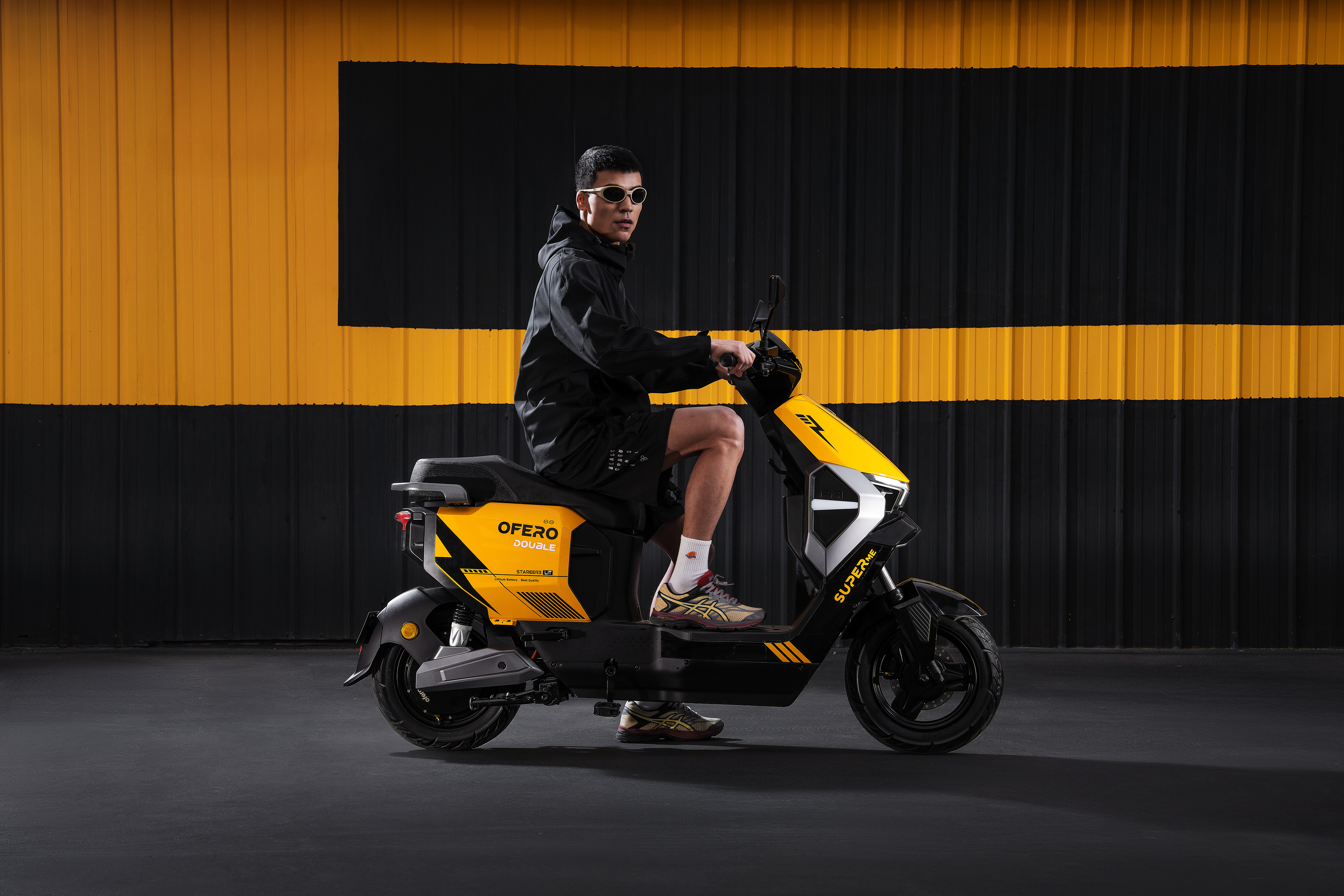
Initially, Ofero did not identify Africa as a target market because of its low purchasing power, Wang said. But after some research, the firm found that two-wheeler vehicles are commonly used as taxis there, opening a whole new set of opportunities.
Africa has around 27 million fuel motorcycles, 80 percent of which are used as taxis. Riders typically purchase them through daily installments. "If I make money running a motorcycle taxi today, I pay tomorrow's installment," Wang explained.
Ofero believes that in Africa, business-led models may accelerate adoption in early markets. According to the company’s estimates, riders could increase their monthly income from taxi operations to CNY1,400 (USD200) from about CNY1,000. "I believe such a big improvement is sufficient to incentivize riders to switch to electric vehicles," Wang noted.
To adapt to rough roads and high temperatures, Ofero designed anti-sand tires and heat-resistant batteries. It also developed a payment model suited to locals' daily installment habits and partnered with local battery-swapping operators.
About the possibility of entering the Chinese market, Wang expressed caution. “If we achieve 70 percent to 80 percent of the scale of leading Chinese competitors through our overseas operations, only then will I believe we have the capability to compete in the Chinese market.”
The Chinese market is a more brutal, intensely competitive market, he noted, adding that when capabilities are not sufficient, running in is just “killing yourself.”
Wang acknowledged the pressure of running a manufacturing and logistics-heavy business across multiple countries. “The pressure is particularly intense when cash flow is tight.”
With production-to-delivery cycles taking two to three months and annual sales doubling, Ofero's working capital requirements continue to rise.
But despite the challenges, Wang has stayed the course. He believes that leveraging China's supply chain strengths in emerging markets, Ofero can build a globally competitive brand and improve mobility for millions.
Editor: Futura Costaglione





