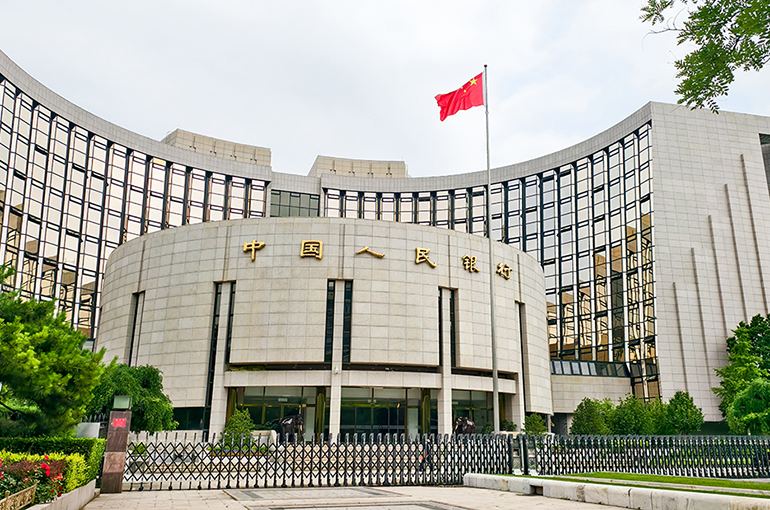
 PBOC to Monitor Overseas Central Bank Policy Shifts, Keep Liquidity Ample
(Yicai) Aug. 13 -- China’s central bank will closely watch monetary policy shifts at major overseas central banks as it seeks to keep domestic liquidity ample and money-market rates stable, according to a new policy report.
The People’s Bank of China will strengthen its monitoring of liquidity supply and demand in the banking system and developments in the money market, according to its second-quarter monetary policy report released yesterday. It will also use and adjust monetary policy tools as needed to better guide short-term money-market rates to move steadily around policy rates.
The PBOC said policy shifts by major overseas central banks, including the US Federal Reserve and the European Central Bank, could spill over into the global economy and financial markets. International crude oil and commodity prices rose at one point this year amid tensions in the Middle East, while inflation in major economies generally increased because of external supply shocks.
Market experts said that China should closely monitor uncertainties surrounding monetary policy adjustments in major economies and calibrate the intensity, pace, and timing of its own policy based on domestic and overseas economic and financial conditions as well as financial-market developments.
Overseas Policy Shifts
Adjustments by major central banks usually have some spillover effects on global financial markets, the experts said. As China has become deeply integrated into globalization while accelerating the development of its domestic and international dual-circulation model, it also needs to closely monitor uncertainties surrounding monetary policy adjustments by major economies.
But the current round of monetary policy adjustments by major central banks may be relatively mild, the PBOC report noted.
The intensity of the latest energy shock is easing, so even if central banks in major developed economies need to raise interest rates, the increases do not need to be large, according to the report. Moreover, monetary policy in major overseas economies was already somewhat restrictive before the latest adjustments, meaning recent rate hikes have mainly changed interest rates and liquidity rather than represented a “significant reversal” of macro policies.
The ECB raised its three key interest rates by 25 basis points in June in response to inflationary pressure stemming from the conflict in the Middle East and left them unchanged at its July meeting. The Fed, meanwhile, had maintained its target range for the federal funds rate at 3.5 percent to 3.75 percent since the beginning of the year, according to its July monetary policy report.
Domestic Policy to Stay Moderately Loose
China is a large economy, and its monetary policy has long prioritized domestic conditions while taking into account the balance between internal and external factors, industry experts said.
In recent years, the PBOC has implemented a moderately loose monetary policy, mainly to create an appropriate monetary and financial environment for the stable operation and high-quality development of the domestic economy, the experts added.
Looking ahead, China should make full use of existing policies, introduce practical and effective incremental measures in a timely manner, step up countercyclical adjustments, expand domestic demand, and optimize supply, the PBOC said.
The central bank will continue implementing a moderately loose monetary policy and seek to generate greater synergies between new and existing policy measures, according to the report.
Editor: Emmi Laine