



 Shanghai’s Lingang to Nurture Offshore Finance With New Zone
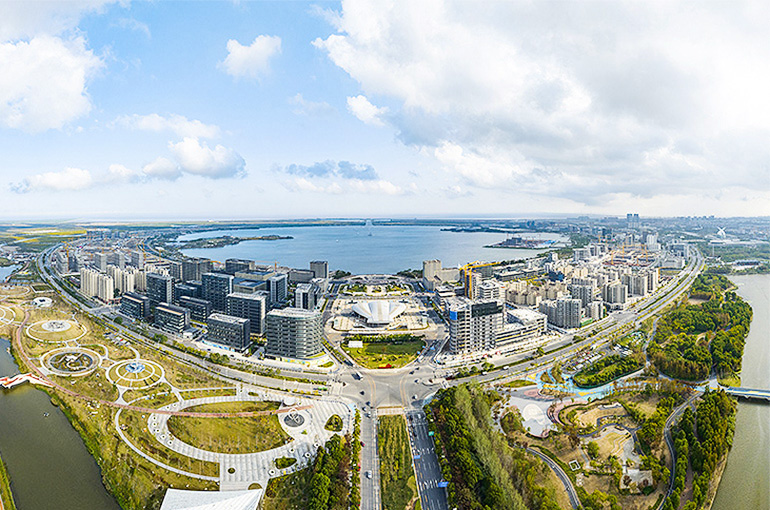
(Yicai) Jan. 8 -- Lingang Special Area, a key testing ground for economic and trade policies within the Shanghai Free Trade Zone, will establish an offshore financial (economic) functional zone this year to promote openness in offshore finance.
The new offshore financial (economic) functional zone will focus on expanding five key business areas, which are offshore trade, non-resident mergers and acquisitions, treasury centers, offshore leasing, and reinsurance, Chen Jinshan, director of Lingang’s administrative committee, said at the Lingang New Area 2026 Institutional Innovation and Business Environment Optimization Conference held yesterday.
Offshore financial (economic) functional zones are designated areas within a country or region that provide cross-border financial services to foreign enterprises, institutions, and individuals. Financial transactions, capital flows, and business operations within the zone are relatively independent from the conventional onshore financial system of the host country. The core objective is to implement a ‘domestic but offshore’ custom financial regulatory and service model.
The establishment of an offshore financial (economic) functional zone will be one of 10 key institutional innovation tasks prioritized for advancement in Lingang this year, according to the annual work plan for institutional innovation and improving the business environment released at the conference yesterday.
The plan also specifies that this year, Lingang will focus on key areas, such as cross-border data, cross-border finance, offshore trade, high-level shipping services, offshore scientific and technological innovation, and cross-border healthcare.
Moreover, the special area will formulate and implement work plans for the innovative opening-up of cross-border and offshore businesses and comprehensive reform plans, including its own special enhancement plan and the Shanghai FTZ institutional opening 2.0 plan.
Lingang is at the forefront of China’s institutional opening-up, according to Chen. It aims to help enterprises solve problems and reduce institutional transaction costs through institutional innovation, which will attract more businesses to invest and develop in the area and encourage more young talent to start their own businesses and seek employment there, he explained.
Editors: Tang Shihua, Futura Costaglione





