



 Stellantis Backs New China JV to Produce Electric Jeep, Peugeot Cars
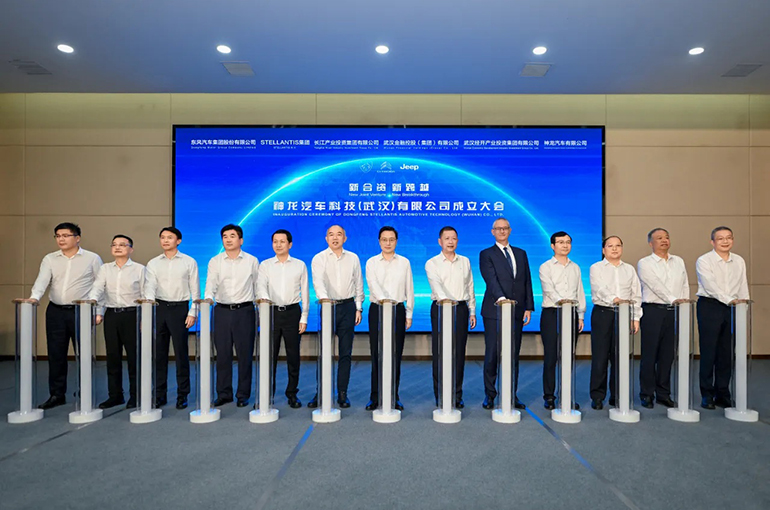
(Yicai) Aug. 20 -- Dongfeng Stellantis Automotive Technology, a joint venture backed by European car giant Stellantis, was inaugurated today. Yicai learned that the new company will focus on new energy vehicles, with its initial lineup featuring electrified Jeep and Peugeot models slated for global distribution.
Consumers in China could previously only buy imported electric Jeeps. With the launch of DSAT, electric models will now be locally manufactured, sold, and exported from the country.
DSAT, which has registered capital of about CNY8.2 billion (USD1.2 billion), is jointly owned by six investors. Dongfeng Peugeot-Citroën Automobile holds a 24.1 percent stake, while Dongfeng Motor and Stellantis each hold about 13.5 percent. Yangtze River Industry Group has 9.8 percent, while Wuhan Financial Holdings and Wuhan Development Zone Industrial Investment Group both own 19.5 percent.
The new venture is a crucial step in implementing the strategic pact announced by Stellantis and Dongfeng Motor on May 15, said Antonio Filosa, chief executive officer of Stellantis. They formed their JV 34 years ago, and it has since produced over 6.5 million Peugeot and Citroën vehicles.
DSAT will serve as the platform for their new projects, with Stellantis in dire need of an upturn following years of losses and failed electric vehicle strategies.
In the initial phase, DSAT will roll out four all-new NEV models, including the first batch of Jeeps alongside two Peugeot models. Spanning both pure electric and plug-in hybrid technologies, the lineup aims to cater to diverse needs, including off-roading, urban commuting, and family travel.
The four models are scheduled to enter production at DPCA’s Wuhan plant from next year and will be distributed worldwide through Stellantis’s global sales networks, Filosa said.
Sales of French cars in China plunged 25 percent to just 19,900 in the first seven months of the year, according to the China Passenger Car Association, and French NEVs still face a highly competitive and challenging market environment.
Editor: Tom Litting





