



 Battery Life of Most NEVs in China Is Less Than Half in Winter
(Yicai Global) Dec. 14 -- Though the market penetration rate of new energy vehicles is soaring, the problem of lower winter mileage persists. Tests have shown that although Chinese brands performed slightly better than joint venture brands, the battery life of NEVs in extremely cold weather conditions is still less than half.
NEV endurance at extremely low temperatures can reach an average of only 48.5 percent, up 4 percent from last year, according to the results of tests done by auto industry website Dongchedi on more than 60 mainstream models of 34 brands at an average of between minus 15 degrees Celsius and minus 30° C. The average range was 268 kilometers, an increase of 14 percent on last year.
The average endurance rate of Chinese NEVs was 49.1 percent, while that of joint venture models was 45.8 percent, the tests showed. The fast full-charging time among domestic NEVs averaged 107.1 minutes, compared with 162.3 minutes for JV vehicles.
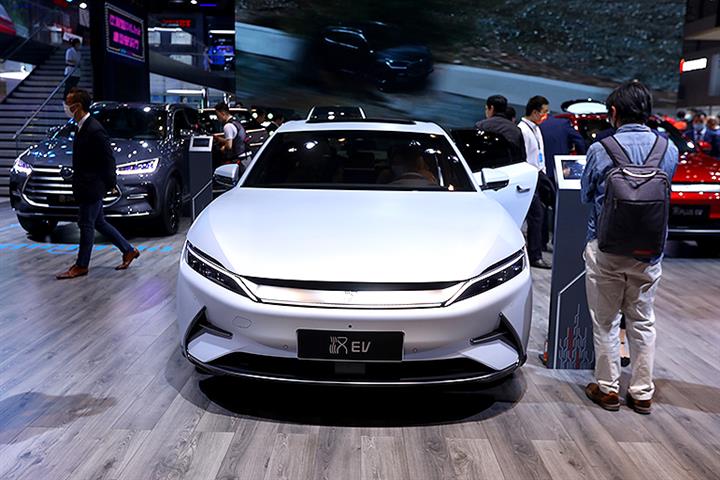
Nine of the top 10 NEV models for endurance were domestic cars, with BYD’s Han electric vehicle, Extreme Fox Alpha S, and Nio ET7 ranking first to third.
The lower the temperature, the denser the electrolyte will be, resulting in a large falloff in battery capacity, said Zhang Hong, secretary-general of the New Energy Vehicle Branch of the China Automobile Dealers Association.
Extremely cold weather will also bring hidden dangers and problems, such as reducing the amount energy for driving because of in-car heating, so NEV endurance in winter is generally shortened, he added.
Dongchedi’s tests also showed a gap between the reliability of NEVs and fuel cars in extremely cold conditions. After standing at minus 30° C for a night, only 95 percent of new energy models can start normally, compared with 100 percent of fuel vehicles. Thirty-eight percent of the tested NEVs had various problems, including frozen windows and door handles and air suspension failure.
Because of lower endurance in cold winter areas, NEVS are less appealing to buyers who live in such places. Central and eastern regions of China such as the cities of Beijing, Tianjin, and Shanghai and the provinces of Hebei, Jiangsu, and Zhejiang, use NEVs the most, while northwestern and northeastern areas lag far behind, according to the national NEV monitoring and management platform.
Editor: Futura Costaglione





