



 Yangtze River Delta to Focus Air Pollution Control on Renewable Energy Supply Through 2028
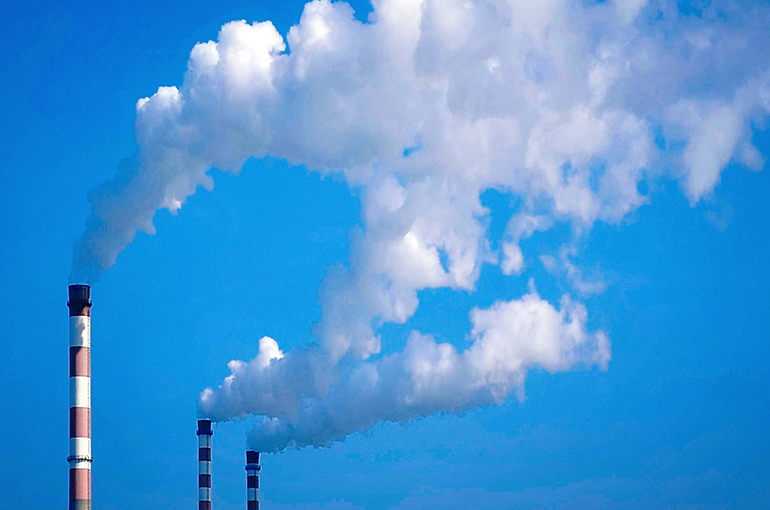
(Yicai) May 21 -- The Yangtze River Delta region, which encompasses Shanghai and Anhui, Jiangsu, and Zhejiang provinces, has drafted an air pollution prevention and control plan for the next three years, aiming to further expand the supply of green energy while transitioning to cleaner coal-fired power generation, boilers, and kilns.
The plan, released by an official from the Shanghai Municipal Bureau of Ecology and Environment at the Yangtze River Delta Regional Air Pollution Control Conference held in Shanghai yesterday, also outlines efforts to accelerate the phase-out of China IV emission standard diesel trucks around the Taihu Lake and Hangzhou Bay areas while increasing the use of new energy heavy-duty trucks. In addition, it calls for advancing green port and shipping development to build greener freight corridors.
The annual average PM2.5 concentration in the Yangtze River Delta region more than halved to 31.7 micrograms per cubic meter over the past decade, highlighting the significant improvement in the regional air quality, according to official data. The figure in Shanghai has shrunken 50.3 percent to 26.3 mcg per cbm, recording “good” or “excellent” on the Air Quality Index in almost 90 percent of days.
However, given current macroeconomic trends, if the industrial structure and pollution-control standards seen last year remain unchanged, emissions of major air pollutants across the region will continue to rise and add to the pressure on air quality improvement efforts, noted He Kebin, an academician at the Chinese Academy of Engineering and professor at Tsinghua University’s School of Environment.
To counter this, He suggested that regional emission reduction strategies should prioritize accelerating the phase-out of obsolete vehicles, machinery, and vessels, enforcing ultra-low emissions and stricter standards in key industries, and implementing comprehensive management of volatile organic compounds.
Efforts to cut nitrogen oxide emissions should focus on replacing aging vehicles, machinery, and ships, as well as boosting the supply of green and imported electricity, with transportation accounting for around 76 percent of the expected NOx reductions, He said. For VOC cuts, the focus should shift to source substitution and control of fugitive emissions from storage tanks, with the industrial sector making up about 56 percent of the target, He added.
In addition, carbon dioxide emission cuts should rely on expanding supplies of renewable energy and power transmitted from other regions, alongside transitioning mobile emission sources to new energy alternatives, He stressed.
Editor: Martin Kadiev





