



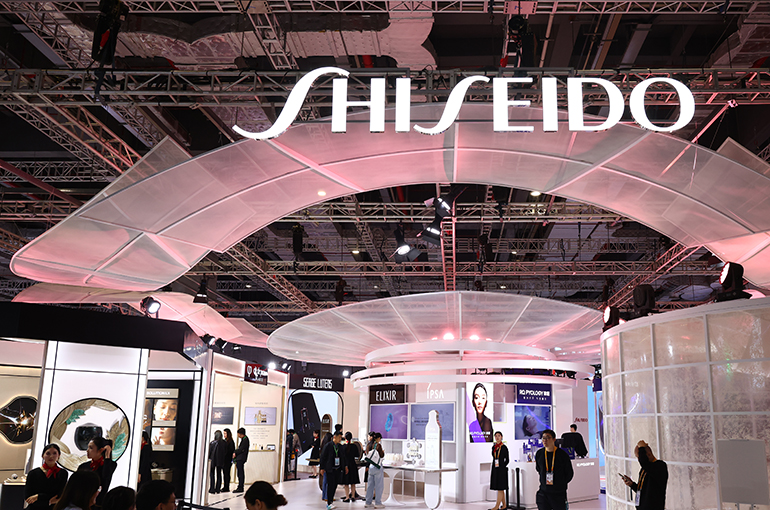
 Beijing Liyuan to Exit Chinese Venture With Japanese Cosmetics Giant Shiseido
(Yicai) June 25 -- Beijing Liyuan will withdraw from Shiseido Liyuan Cosmetics, a Chinese joint venture set up with Japan's Shiseido to produce perfumes, cosmetics, and other toilet preparations.
Beijing Liyuan will sell its 35 percent stake in Shiseido Liyuan at a base price of CNY199.5 million (USD29.3 million), according to information on equity transaction bourse China Beijing Equity Exchange. A source from Shiseido China Investment confirmed the news to Yicai.
Shiseido Liyuan was established in 1991, with Shiseido and Shiseido China Investment jointly holding a 65 percent stake and Beijing Liyuan the rest. Its most popular brand in the county is Aupres.
Aupres entered major department stores in China with a mid- to high-end positioning in its early years, reaping the benefits of the market at the time, an industry insider close to Shiseido Liyuan said to Yicai. But with the rise of e-commerce and domestic brands, its brand appeal has significantly declined in recent years, the person noted.
In addition, Shiseido Liyuan made pricing mistakes during an e-commerce promotion season in China, offering too large discounts that impacted the in-store sales of Aupres, the insider pointed out.
Shiseido Liyuan logged a net loss of CNY53.4 million (USD7.9 million) in the five months ended May 31 on revenue of CNY234 million, with its performance worsening after its loss stood at CNY41.3 million last year, while income was CNY869 million, according to data released by the China Beijing Equity Exchange.
Shiseido Liyua's poor performance is similar to that of other Japanese cosmetics brands in China over the past few years, mainly because the popularity of their products has significantly declined, Bai Yunhu, an expert in the daily chemical beauty industry, said to Yicai.
Shiseido has made other major strategic contractions in China, including deregistering its South China-focused wholly-owned unit Shiseido Guangdong Cosmetics last September, closing the overseas flagship store of its MaQuillAGE brand on Alibaba Group Holding's site Tmall, and emptying its overseas flagship store on TikTok's sister app Douyin in April.
Editors: Tang Shihua, Martin Kadiev





