 China Adds 38 New College Majors, Including Embodied AI and Low-Altitude Economy
(Yicai) April 29 -- China has introduced 38 new undergraduate degrees, including embodied intelligence and low-altitude economy and management, in line with the country's scientific and technological innovation and industrial development needs.
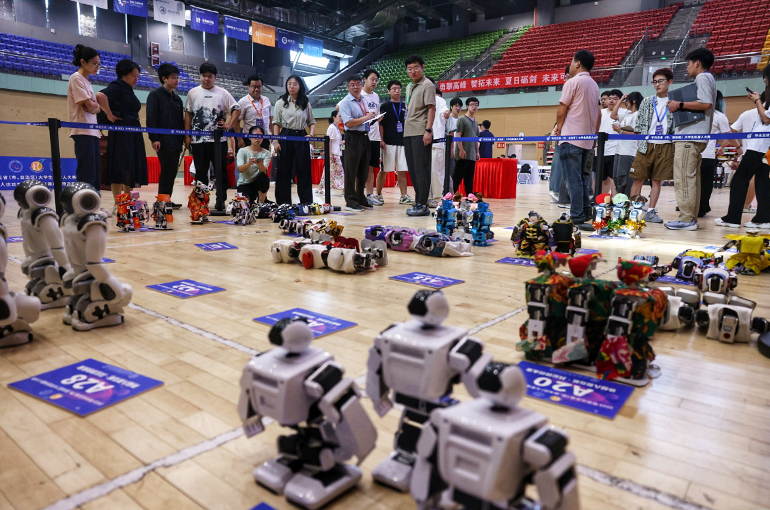
The Ministry of Education supports nine universities, including Harbin Institute of Technology and Beihang University in Beijing, to add embodied intelligence majors to promote the integration of next-generation artificial intelligence with the real economy and empower high-quality economic and social development, according to the latest catalog for general higher education released yesterday.
In addition, the ministry added biomanufacturing and brain-computer science and technology degrees to promote the development of emerging industries, integrated engineering of transportation energy and agricultural robotics degrees to promote the upgrading of traditional industries, and digital trade and digital finance degrees to build new forms of economy.
The catalog has set up an interdisciplinary category for the first time, including 11 existing majors like future robotics and cross-engineering, and four new ones, such as embodied intelligence and brain-computer sci-tech, to better meet the needs of emerging interdisciplinary development and compound talent training.
The latest version of the catalog features 883 degrees in 13 categories, with an adjustment ratio of more than 10 percent for the first time, further optimizing the structure of majors, the ministry pointed out.
China has continuously adjusted and optimized college major structures to promote higher education to better serve the needs of its economic and social development. During the country's 14th Five-Year Plan, which ran through last year, domestic universities added 10,200 new programs for undergraduates, while 12,200 were withdrawn or suspended, with a cumulative adjustment ratio of over 30 percent, the ministry noted.
China should improve the talent training mechanism, continue to promote the reform of universities and the dynamic adjustment of disciplines and majors, build national interdisciplinary centers, and enhance the cultivation of top innovative talents, according to this year's Government Work Report, released at the Two Sessions last month.
Editors: Dou Shicong, Martin Kadiev