



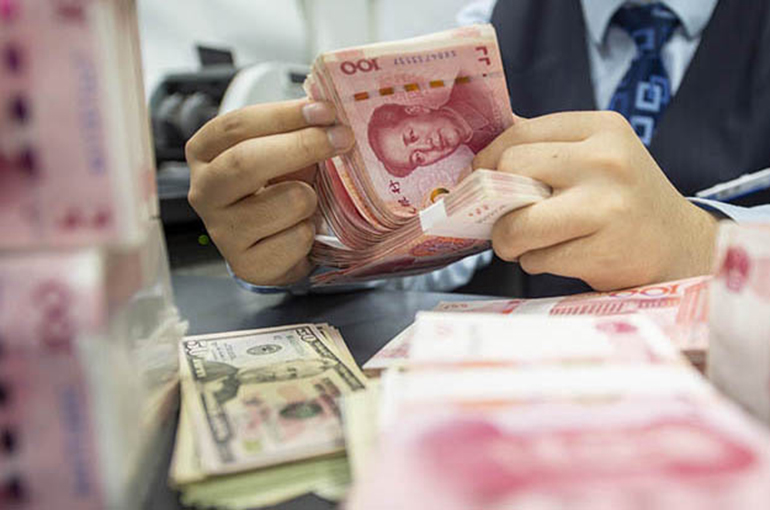
 China Highlights Importance of Keeping Chinese Yuan Stable in 2026
(Yicai) Dec. 12 -- China stressed that it is essential to maintain the basic stability of the Chinese yuan exchange rate at a reasonable and balanced level for the fourth consecutive year during the latest annual Central Economic Work Conference.
The yuan exchange rate will be kept generally stable at an adaptive, balanced level, according to an announcement made after the two-day conference, which ended in Beijing yesterday. "China will make macro policy orientations more consistent and effective, and refine expectations management mechanisms to bolster social confidence."
The Central Economic Work Conference is held by the Central Committee of the Communist Party of China and the State Council at the end of the year. It serves as an authoritative barometer for assessing the country's economic situation and introduces stimulus measures for the year ahead.
"Given the combined impact of internal and external uncertainties, the yuan exchange rate is expected to continue exhibiting two-way fluctuations next year," said Guan Tao, global chief economist at BOC International China.
China's signal is for a policy orientation aimed at preventing excessive depreciation and excessive appreciation of the yuan, Guan noted. The approach will help curb the pro-cyclical, one-sided herd behavior in the foreign exchange market and create a stable financial environment to support the sustained recovery of the economy, Guan added.
The exchange rate stabilization policy is primarily aimed at preventing a consensus-driven one-sided expectation in the market, according to Ming Ming, chief economist at Citic Securities. Following the Federal Reserve's interest rate cuts, the yuan will remain relatively strong against the US dollar by the end of the year, Ming pointed out.
However, the central level of the exchange rate may struggle to fall below 7, Ming noted, adding that although seasonal factors related to year-end settlements could lead to a temporary breakthrough.
The trend with the US Dollar index's relatively weak performance may continue into next year, which would create a relatively favorable external environment for the yuan, Ming said. Against this backdrop, the redback's exchange rate may appreciate moderately in 2026, Ming added.
If the domestic economy's endogenous momentum continues to gradually recover next year, it is likely to align with external market factors to form a significant synergy, potentially driving the central level of the yuan to US dollar exchange rate to break below 7, Ming pointed out.
The yuan to US dollar exchange rate is likely to continue appreciating, said Sun Binbin, chief economist at Caitong Securities, adding that he anticipates that the threshold for the first half of next year will be 7, with the potential to break below that in the second half.
The steady progress of yuan internationalization, along with the increasing proportion of its usage in areas such as China's foreign trade and outbound investment, supports the medium- to long-term demand for the currency and promotes its steady appreciation, Sun pointed out. However, the extent and pace of appreciation should not be too rapid because it could negatively impact the growth rate of exports, he said.
Editor: Martin Kadiev





