



 Strong Yuan Is Needed for China’s Growth, Global Financial Stability, IMF Ex-Deputy MD Says
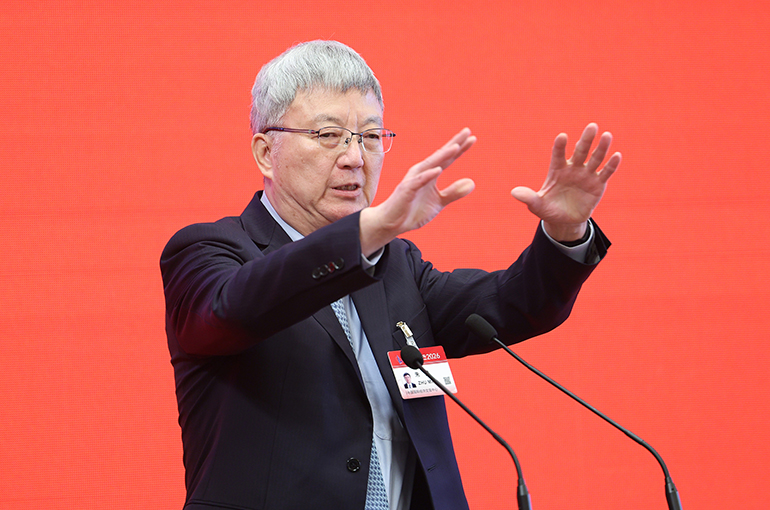
(Yicai) March 24 -- A strong Chinese yuan is both an intrinsic requirement for China’s economic growth and a necessity for global financial stability, a former deputy managing director of the International Monetary Fund has said.
Yuan internationalization has made notable progress in recent years, with its share of cross-border financial transactions continuing to increase, Zhu Min told the three-day China Development Forum that ended in Beijing yesterday, referring to China’s long-term strategy to increase the global usage of its currency.
But the redback’s international usage is still relatively low and its global standing does not yet match China’s position as the world’s second-largest economy, noted Zhu, who is also a former deputy governor of the People’s Bank of China.
A stronger Chinese economy requires a strong yuan, which also entails expanding its use in international trade, especially with countries connected with the Belt and Road Initiative, he said.
He called for greater use of the yuan in industrial chain payments and cross-border financing, mainly by China, along with corresponding support in commercial scenarios. At the same time, China should further improve its capital management framework and use economic policy tools to advance yuan internationalization, Zhu added.
Further efforts are needed to build and improve the financial market, including the Chinese and international bond markets as well as yuan-denominated bond yield curve derivatives in the global market, so that holders can invest in Chinese assets, according to Zhu.
Further improvements to China's payment system are also needed, leveraging the Cross-Border Interbank Payment System to expand the network, making it more cost-effective, faster, and efficient, he added.
Expanding Hong Kong’s offshore yuan business is needed to support the currency’s long-term development, while China should also leverage the digital yuan to enhance cross-border payment capabilities, Zhu said.
“These steps can effectively advance the yuan’s progress," Zhu pointed out. Before achieving full convertibility, yuan internationalization still has significant scope, he added, noting that its development is necessary for the entire world.
Amid geo-economic changes, the US dollar's dominant position has been weakening, Zhu said. Simultaneously, dollar weaponization and the "trade war" have led to a clear global trend of dedollarization, with gold and non-US currency reserves rising steadily, he pointed out.
Editor: Martin Kadiev





