



 China’s ByteDance, Alibaba Merge AI Office Tools in Push to Commercialize AI
(Yicai) Aug. 3 -- Chinese internet giants ByteDance Technology and Alibaba Group Holding have recently started to integrate their artificial intelligence-powered office products as they seek to accelerate the commercialization of AI applications.
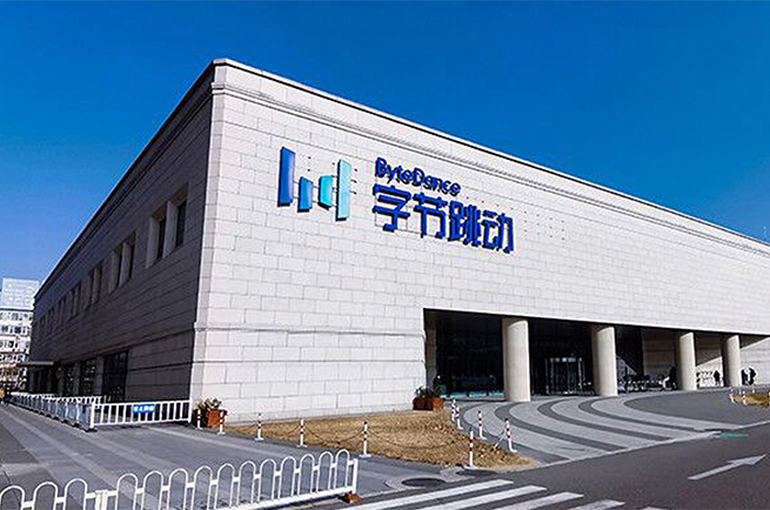
The product teams behind ByteDance’s Feishu platform and AI assistant Doubao will merge to form a new Doubao product team led by Doubao director Zhao Qi, the Beijing-based company said on July 30. Feishu head Xie Xin will report to Zhao following the restructuring.
Similarly, Alibaba merged three of its agent products, namely QoderWork, Wukong and MuleRun, into a new product called QwenWork on July 27. Alibaba's approach is to use QoderWork as the foundation while incorporating capabilities from Wukong and MuleRun to create a more powerful AI product targeting enterprise productivity scenarios.
One of the major goals for internet giants integrating their workplace productivity ecosystems is commercialization, industry analyst Zhang Shule told Yicai. General-purpose AI models developed by major tech firms are geared toward office use, and only by combining them with their own workplace platforms can they gradually tap into the larger enterprise market for paid mobile office solutions after achieving large-scale adoption among consumer users.
Feishu's Go-To-Market team, which covers marketing, sales and customer service, will also merge with ByteDance's Volcano Engine team, which is responsible for cloud computing and enterprise technology services, ByteDance said. They will form a new business-focused GTM unit that will oversee the marketing, sales and customer service operations of ByteDance's cloud services, including its Model-as-a-Service and Software-as-a-Service businesses. Volcano Engine head Tan Dai will lead the organization, with Feishu sales director Lin Chan and Feishu strategy and marketing head Shi Zhijun reporting to him.
A Feishu insider told Yicai that after the mergers, Volcano Engine will be responsible for the MaaS business, while Feishu will leverage Doubao to deliver productivity solutions at the product level. The organizational restructuring aims to reduce duplicated efforts and resource waste. By branching out of the relatively low ceiling of the traditional office software market, Feishu can work with Doubao to build AI-driven productivity solutions, the person said.
Meanwhile, Alibaba's QwenWork has already started small-scale testing and has launched a local desktop client. Yicai learned that QwenWork plans to subsequently release a web version and a version embedded within DingTalk, which is Hangzhou-based Alibaba’s workplace collaboration platform.
Competition among AI office agents will increasingly focus on their ability to deliver solutions in real business scenarios, mainly in the quality and reliability of completing tasks, Chen Chen, a senior analyst at Chinese market research firm Analysys, told Yicai.
At the same time, the improvement of enterprise-level capabilities will become essential, including team collaboration, hierarchical permission management, business knowledge accumulation and reuse, as well as security and compliance features, Chen said. As AI office applications continue to evolve, market foundations such as general-purpose models, protocol standards and policy frameworks will further mature. Market players are expected to strengthen exploration of AI use cases in workplace scenarios, with the broader trend moving toward deeper integration with collaborative office ecosystems, he added.
As policy frameworks for AI agents improve and national standards for Agent Interconnection Protocols are implemented, procurement channels for companies are expected to open up, Chen said. A path toward converting consumer users may gradually take shape next year.
Editor: Kim Taylor





