



 China Can Diagnose Nipah Virus via Next-Gen Sequencing, Expert Says
(Yicai) Jan. 27 -- Amid the Nipah virus outbreak in India, the leader of Shanghai's Covid-19 medical treatment expert team said that China is able to diagnose the virus via next-generation sequencing.
"There are no issues with China's second-generation sequencing detection capabilities," noted Zhang Wenhong, who is also director of Huashan Hospital's infectious diseases department.
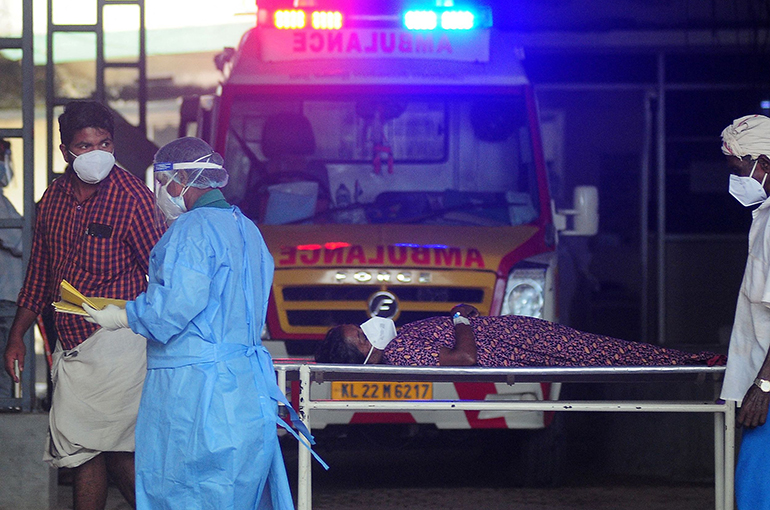
Five Nipah cases were recently confirmed in India's eastern state of West Bengal, with two healthcare workers from a private hospital near Kolkata being the first to be diagnosed, Xinhua News Agency reported, citing Indian media.
China's tertiary hospitals and port disease control centers have the capability for viral nucleic acid testing and can conduct relevant monitoring at all times, but the distribution is uneven, a public health expert said to Yicai. In addition, clinical treatment experience is lacking since there have been no confirmed cases in the country, while hospitals lack practical experience in providing respiratory support and managing neurological complications for severe cases, the expert noted.
Next-gen sequencing has become a key tool in addressing high-risk pathogens such as the Nipah virus. It not only enables rapid diagnosis and tracing but also facilitates long-term monitoring of viral evolution, assessment of public health risks, and guidance for medical strategies, such as vaccine development.
The human-to-human transmission of the Nipah virus primarily occurs among hospital staff, caregivers, and family members, noted Lu Hongzhou, director of Shenzhen Third People's Hospital. Awareness among the public and healthcare personnel should be improved to reduce the risk of fluid and close contact between infected individuals and caregivers and prevent transmission within hospitals, he added.
The Nipah virus has a case fatality rate estimated at around 40 percent and is listed as one of the top 10 priority infectious diseases by the World Health Organization. Since 1998, outbreaks have been reported in Bangladesh, India, Malaysia, the Philippines, and Singapore.
China's newly revised Frontier Health and Quarantine Law, which was implemented last year, included the Nipah virus in its monitoring protocols. Customs authorities conduct screenings for incoming travelers from affected areas, and any suspected cases must be immediately isolated and referred to designated medical institutions.
On Jan. 26, the Civil Aviation Authority of Thailand implemented comprehensive screening for flights from West Bengal.
Editor: Martin Kadiev





