



 Nvidia, China’s Chery Auto Ally on Physical AI
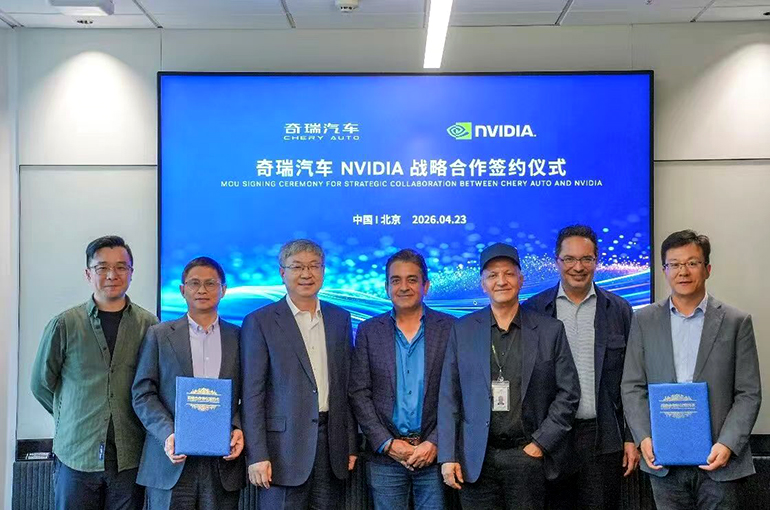
(Yicai) April 24 -- Chery Automobile is teaming up with Nvidia to jointly develop physical artificial intelligence, becoming the second Chinese carmaker to enter such a partnership with the US chip giant in about a month.
Chery Auto and Nvidia will collaborate in three key areas: assisted driving, cabin AI, and robotics, the Anhui-based company announced yesterday. The partnership will use Nvidia's autonomous driving development platform Drive Hyperion to design Level-3 and 4 smart cars for the Chinese market, it noted.
In addition, Chery Auto will use Nvidia Drive to develop a next-generation smart cabin experience, including upgrades driven by generative AI, the company said. It will also draw on Nvidia’s Jetson embedded AI computing platform, the Isaac Sim robotics simulation framework, and the Isaac GR00T humanoid robot development platform to explore frontier areas such as embodied intelligence.
Intelligentization is the core engine of Chery Auto's global strategy, Chairman Yin Tongyue said at the signing ceremony. The alliance with California-based Nvidia is a crucial step to integrate top international tech resources and accelerate the carmaker's progress toward becoming a global high-tech ecosystem group, he added.
Chinese automakers are stepping up their push into AI-related areas. Last month, Hangzhou-based Geely Automobile Holdings announced a physical, enterprise, and industrial AI alliance with Nvidia at the US tech giant’s Nvidia GTC 2026 conference.
Electric vehicle startups are also ramping up AI spending. Last month, Xpeng said its annual outlay on researching and developing physical AI will top CNY7 billion (USD1 billion), aiming to advance the mass production of robotaxis, humanoid robots, and flying cars, while Li Auto revealed that half of its planned CNY12 billion (USD1.8 billion) R&D investment for 2026 will go on AI.
Editors: Dou Shicong, Martin Kadiev





