



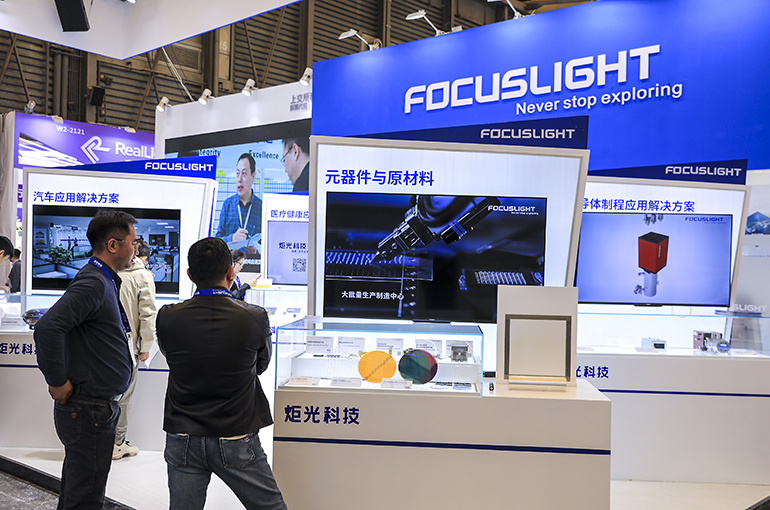
 China’s FocusLight Slumps After Key European Client Axes LiDAR Orders
(Yicai) April 7 -- Shares in FocusLight Technology tumbled as much as 6.9 percent today after the Chinese laser component developer said that a major European Tier 1 auto parts client had cancelled its orders for core LiDAR components.
FocusLight’s stock price [SHA: 688167] ended the day down 5.3 percent at CNY370.22 (USD54). Earlier in the day it sank to CNY364.
Due to the cancellation of a new car model by the end automaker, orders for LiDAR modules and supporting passive optical components will be terminated, the Xi’an-based firm said on April 3, citing a notice it received from the European automotive Tier 1 supplier.
The decision to scrap the new model was part of the car manufacturer’s own strategic adjustments and had nothing to do with the Tier 1 supplier or its partners, FocusLight said.
FocusLight has already delivered about 2,700 sets of products to the client to date, it said. The project was scheduled to start mass production this year, and preparations were underway. Both sides will now discuss the business implications of ending the project, including contract obligations and the handling of unfulfilled orders, in accordance with contractual terms and international practices.
FocusLight penned contracts with the European client between December 2023 and December 2024 to supply around 650,000 sets of LiDAR transmitter modules and supporting passive optical components for two new car models. However, after one model was dropped, the supply volume was reduced to 500,000 units in April 2025.
Automotive LiDAR is a core component for safe and reliable autonomous driving. It is essential for passenger cars, robotaxis, unmanned delivery vehicles and smart heavy-duty trucks with Level Two and above autonomous driving. FocusLight’s clients include BYD, Germany’s Continental Group, and Luminar, a leading US LiDAR manufacturer.
European automakers have been scaling back in recent years due to sluggish electric car demand and profit pressures. This includes cutting model lines, trimming research and development spending and slowing the development of advanced autonomous driving solutions. This has led to the cancellation of the launch of several models equipped with LiDAR.
Editor: Kim Taylor





