 China’s Jiangsu, Heilongjiang Stiffen National Appliance Trade-In Program With Own Subsidies
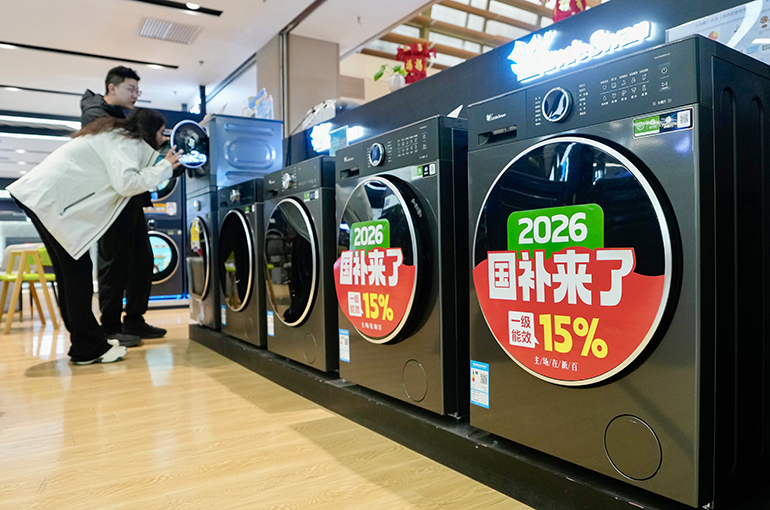
(Yicai) April 21 -- China's Jiangsu and Heilongjiang provinces are reinforcing a national consumer goods trade-in program by offering their own purchase subsidies on home appliances in a bid to lift household spending. More provinces are expected to follow soon.
Under a policy released by Jiangsu’s commerce department on April 17, consumers can get 15 percent off items in 10 categories, such as smart home products and smart devices, including the latest embodied intelligence robots, as well as consumer medical devices, up to CNY1,500 (USD208) per item. The most anyone can claim during the campaign is CNY15,000 (USD2,080).
The day after the policy was announced, sales of subsidized home appliances at Suning stores across Jiangsu doubled from a week earlier, a staff member told Yicai.
Heilongjiang launched its subsidy policy on April 18, offering a 15 percent discount on seven categories of smart home products. Neither province disclosed the total size of its subsidy pool, but both said the campaigns have quotas and the grants will end once those quotas are used up.
These additional subsidies reflect a commerce ministry push to promote trade-ins of consumer goods, with other provinces also set to roll out their own grants on smart-home and age-friendly products based on local market and financial conditions so as to invigorate the market and boost consumption, a senior industry source told Yicai.
Similar policies are expected soon in Guangdong, Shanghai, Hubei, Anhui, Chongqing, and other provincial-level regions.
Guangdong’s subsidies will likely cover a wider range of categories than the national grants, but the exact launch date remains uncertain, according to a member of the Guangdong Home Appliances Chamber of Commerce. Another industry source in the province also confirmed this.
Compared with last year, 2026's national subsidy program covers fewer products, offers less support, and raises the threshold for subsidized home appliances by focusing more on high-energy-efficiency goods. The additional provincial grants should help spur local consumption.
Industry insiders are optimistic that the home appliances market will stabilize and rebound this month, boosted by the local subsidy policies, creating potential sales growth during the upcoming Labor Day holiday and June 18 mid-year e-commerce shopping festival.
The home appliances market was under pressure in the first quarter because last year’s subsidy-driven sales surge created a high base of comparison. Retail appliance sales, excluding computers, communications, and consumer electronics products, fell 6.2 percent in the three months ended March 31 from a year ago, according to data. Lat month’s figure alone plunged over 12 percent.
China's home appliance exports also fell almost 1 percent in the first quarter, dragged down by a nearly 18 percent drop in March, according to the General Administration of Customs. At the same time, the conflict in the Middle East has added to raw-material cost pressures for manufacturers.
Editors: Tang Shihua, Futura Costaglione