 Chinese Air Transport Authority Unveils Draft Rules to Regulate Seat Reservation
(Yicai) Jan. 30 -- The China Air Transport Association has issued draft rules to regulate plane seat reservation practices by airlines, standardize the order of air transport, and protect passengers’ legitimate rights and interests.
Published by the CATA yesterday, the draft rules clearly regulate the volume of ‘blocked seats’ on civil aviation flights, as well as the principles to access and release them. The draft rules, which are open for public comments until Feb. 27, are the first systematic industry management standards formulated by Chinese civil aviation regulators for flight seat selection.
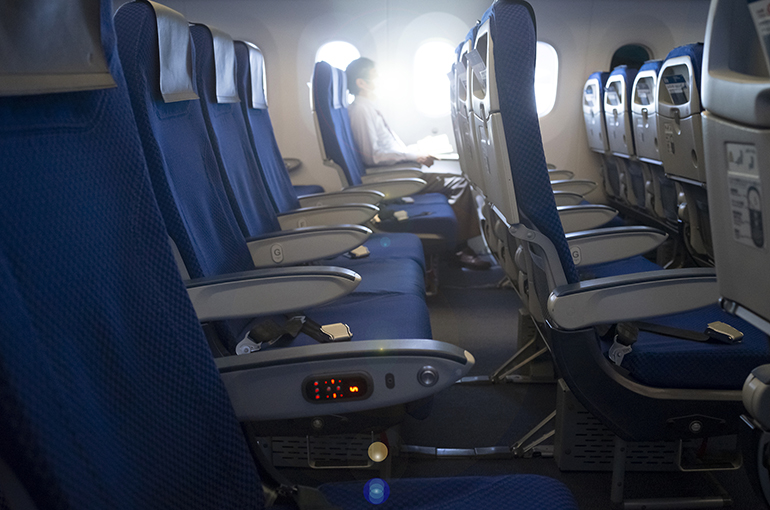
Economy class seats are divided into free selectable seats and ‘blocked seats.’ The proportion of free selectable seats should not be less than 70 percent of the total number of economy class seats on domestic flights and no less than 65 percent on international and regional flights, according to the draft rules.
An appropriate proportion of seat blocking is necessary before flight departure to safeguard the rights and experience of passengers who purchase tickets close to the departure time, Lin Zhijie, a civil aviation industry insider, told Yicai.
Air tickets bought closer to departure are usually more expensive, so if seat selection were fully unrestricted, passengers paying higher fares would inevitably end up with worse seats, Lin explained.
Airlines should open up more than half of the seats for passengers to choose independently, and the selectable seats should include window seats, aisle seats, and adjacent seats to meet passengers' basic travel needs, he noted.
The seat blocking ratio of the 10 Chinese airlines surveyed by the Jiangsu Consumer Council ranges from 20 percent to 62 percent, with an average of nearly 39 percent.
In recent years, more and more airlines have started charging extra fees for certain seats, with their proportion to the total number of seats constantly increasing. For example, some carriers now impose additional fees to book all seats in the plane’s first six rows.
In this regard, the draft rules explicitly prohibit cash-based paid seat selection on domestic flights. Only eligible members of airlines' frequent flyer programs will be able to redeem specific seats using points, miles, or tier benefits. Paid seat selection will still be allowed on international and regional flights, with air transport operators tasked with selecting seat locations based on passenger demand.
The new rules need to balance consumers’ right to choose and airlines’ need to make money, Lin said. He suggested all seats in the rear and middle of planes be opened for free passenger selection, while those next to emergency exits or in the front rows would bear additional fees, provided the entire process is regulated and transparent.
Editors: Tang Shihua, Futura Costaglione