


 Chinese E-Bikes Industry to Face Hurdles as Sales of Models Under Old National Standards Are Banned
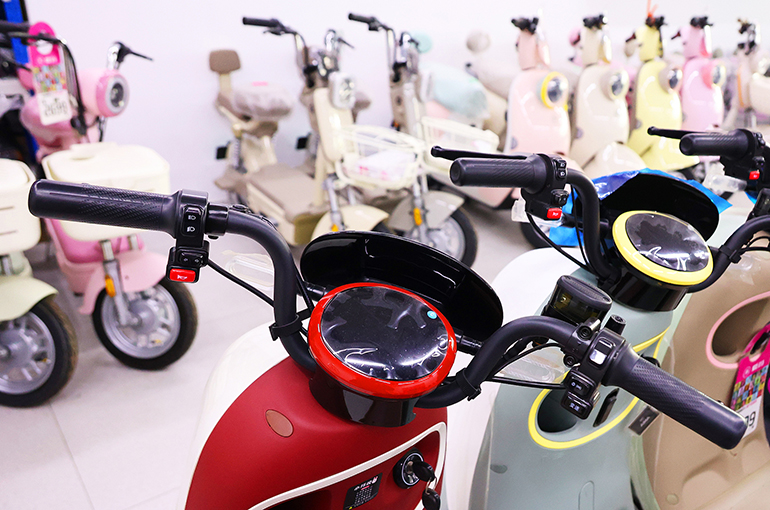
(Yicai) Dec. 3 -- With the full ban on the sale of electric bikes under China's old national standards, the industry is expected to enter a period of troublesome adjustments.
Some e-bike stores, including those under Aima Technology Group, Tailag Technology Group, and Yadea, tried to avoid the sales ban by registering the vehicles they have in stock in the names of their staff and even their relatives before the ban took effect on Dec. 1, Yicai learned during visits.
They now charge additional transfer fee of CNY500 to CNY1,000 (USD70 to USD140) for these products, which they label as 'zero-kilometer second-hand vehicles,' Yicai found.
Effective Sept. 1, the new national standards raised the maximum weight of e-bikes with lead-acid batteries to 63 from 55 kilograms to improve their range, while keeping the speed limit at 25 kilometers per hour, with compulsory blockage of the engine in case of speeding.
The new standards require manufacturers to install battery packs and control units that stop working in case of modifications, use plastic materials accounting for no more than 5.5 percent of the total weight, choose non-metallic materials, such as seats, battery compartments, and decorative components with higher fire resistance, and clearly write their products' suggested service life on plates and certificates.
China implemented a three-month buffer period to give stores time to clear inventory of models under the old national standards while allowing manufacturers to produce models under the new standards.
Sales of e-bikes are expected to experience a big drop in the short term, as prices increase due to the implementation of the new standards for manufacturers, a manager from a manufacturer said, Securities Times reported. It will take at least six months for the market to stabilize and recover, they added.
Some retailers have indicated that the new standards have directly led to a price increase of CNY500 to CNY1,000 for end-user sales. In fact, the prices of entry-level models from certain brands have approached CNY3,000.
Even though the industry may face short-term difficulties, the implementation of the new national standards will accelerate the process of "good money drives bad money out of circulation" in the electric bicycle sector in the long run.
Several leading companies, including Yadea, Aima, and Segway Ninebot, have completed their matrix layout for models that comply with the new standards, and they are expected to launch them in a concentrated manner starting in mid-December.
The upstream segment of the supply chain has already begun to benefit from the upgrade of standards.
Baowu Magnesium Technology said on Nov. 26 that the application of magnesium alloy components among leading electric bicycle manufacturers is rapidly increasing due to the demand for lightweight and flame-retardant materials. Moreover, companies in the Internet of Things sector, such as Queclink Wireless Solutions, are receiving more orders due to the mandatory positioning functions.
China's e-bike market is expected to grow 16 percent to 59.3 million units by 2030 from 51.2 million units this year, driven by policy support and technological advancements, according to data from the LeadLeo Research Institute. Its size will likely increase 1.4 percent to CNY83.1 billion (USD11.8 billion) in the period.
Editor: Futura Costaglione