



 Chinese Market Regulator Conditionally Approves Tencent’s Takeover of Online Audio Platform Ximalaya
(Yicai) May 13 -- Chinese tech giant Tencent Holdings has secured conditional approval from China’s antitrust watchdog to buy online audio platform Ximalaya after an 11-month review.
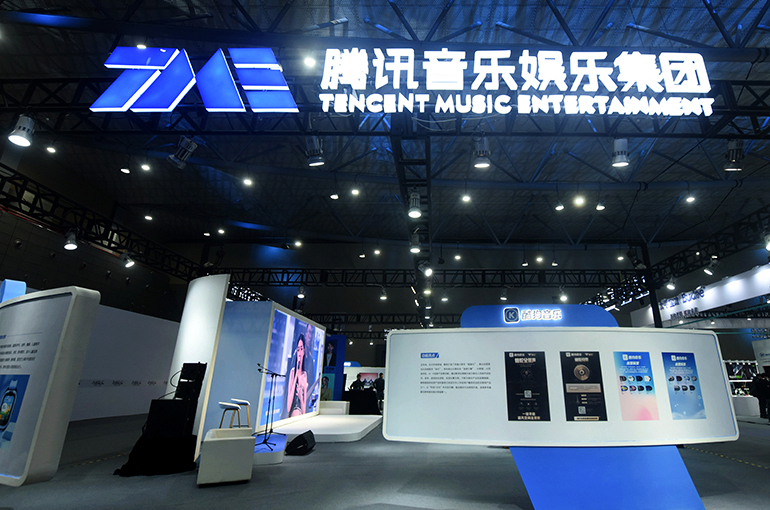
Tencent’s music platform Tencent Music Entertainment can proceed with the acquisition of Ximalaya, but it will be subject to five conditions to ensure fair market competition, as the deal could potentially eliminate or restrict competition in China’s online audio and music streaming market, the State Administration for Market Regulation said in a statement yesterday.
TME announced in June last year that it had signed a binding agreement with Ximalaya to buy the audio platform for USD1.3 billion in cash and through the issuance of new shares equal to as much as 5.6 percent of its total equity to all Ximalaya shareholders and founding investors. Based on TME’s market value back then, the deal was worth a total of USD2.9 billion.
The conditions set by the SAMR ban TME from raising Ximalaya’s service prices, increasing its proportion of free content, entering into exclusive agreements with its copyright holders, bundling audio and music services for carmakers, and blocking creators from using rival platforms.
Through this acquisition, TME can quickly accumulate content resources, internet industry analyst Zhang Shule said. Moreover, the deal is also an appropriate choice from a capital perspective for Ximalaya because it has failed to prove the potential of the “ear economy” to the capital market for years, he added.
However, there is a certain overlap between the user bases of Ximalaya and Tencent’s audiobook platform Lazy Audio, Zhang noted. Whether their positioning will be separated or integrated, as well as the connection and adjustment of their membership systems, remains to be seen.
Established in 2012, Ximalaya offers audiobooks, podcasts, radio broadcasts, and music to more than 300 million users, and was valued at as much as USD4.3 billion in 2020. But since 2021, the business has attempted to go public four times without success and has reportedly gone through many rounds of layoffs and management changes, leading to a sharp drop in its valuation.
After years of losses, Ximalaya achieved its first annual net profit of CNY3.7 billion (USD544.7 million) in 2023.
Ximalaya holds 35 percent to 40 percent of China’s online audio market, followed by Qingting FM and Lazy Audio at around 30 percent, according to data released by LeadLeo Research last November.
TME’s shares [HKG: 1968] were trading down 3.5 percent at HKD34.88 (USD4.45) as of 11.10 a.m. in Hong Kong today. The company’s New York-listed stock [NYSE: TME] fell 1.3 percent to USD9.07 yesterday.
Editor: Futura Costaglione





