 Chinese Scientists Develop Electrolyte Enabling Lithium Batteries to Operate at Minus 50°C
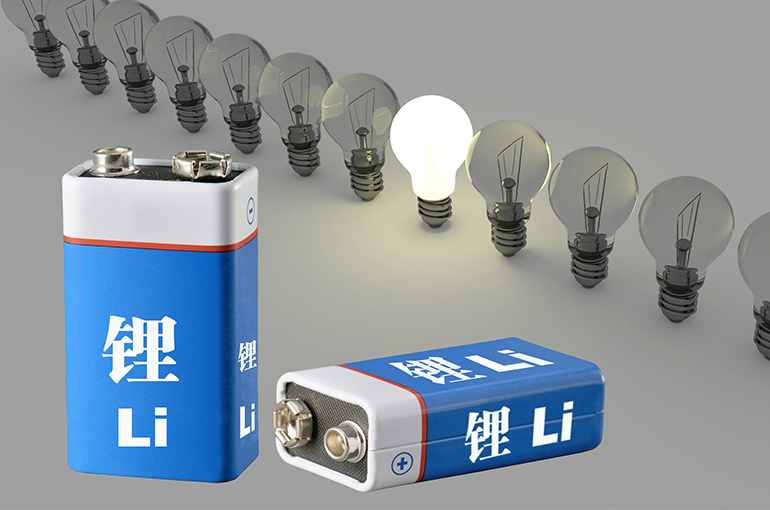
(Yicai) Feb. 26 -- A Chinese research team has developed a new electrolyte that significantly improves lithium battery performance in ultra-low temperatures, with potential applications in electric vehicles, aerospace, and robotics, according to a study published in Nature.
The breakthrough addresses a longstanding limitation of lithium batteries, which struggle to maintain performance below minus 50 degrees centigrade. The newly designed electrolyte allows batteries to retain nearly 400 watt-hours per kilogram even at minus 50 degrees centigrade, compared with the 100 to 300 watt-hours per kilogram typical of commercial batteries today.
The research, published in Nature yesterday, was conducted by scientists from the College of Chemistry at Nankai University and the Shanghai Institute of Space Power-Sources. The team designed a new fluorinated hydrocarbon solvent molecule and built an electrolyte system that replaces the conventional lithium-oxygen coordination mode found in mainstream electrolytes.
Electrolytes serve as the key medium for conducting charged ions between the positive and negative electrodes of lithium batteries. Current mainstream electrolytes consist of lithium salts and carbonate solvents and rely on interactions between lithium and oxygen atoms in the solvent to facilitate dissolution. However, poor wettability limits battery energy density, while restricted charge transfer capacity at low temperatures prevents operation below minus 50 degrees centigrade.
To overcome these constraints, the Nankai University team proposed replacing oxygen atoms with fluorine atoms to enhance the effective dissolution of lithium salts in the electrolyte. The resulting lithium battery achieved an ultra-high energy density of 700 watt-hours per kilogram at room temperature and maintained nearly 400 watt-hours per kilogram at minus 50 degrees centigrade, the research showed.
For comparison, commercial lithium batteries generally offer energy densities between 100 watt-hours per kilogram and 300 watt-hours per kilogram. The 4680 battery developed by electric vehicle maker Tesla, for instance, has an energy density close to 300 watt-hours per kilogram.
High-energy-density batteries based on the new electrolyte have broad application potential in new energy vehicles, embodied intelligent robots, the low-altitude economy, and aerospace, said Chen Jun, associate president of Nankai University, and one of the corresponding authors of the study.
Editor: Emmi Laine