 Chinese Team Transplants Stem Cell-Derived Islets to Diabetes Patients to Address Donor Shortage
(Yicai) March 18 -- A research team at the Chinese Academy of Sciences' Center for Excellence in Molecular Cell Science has transplanted stem cell-derived islets into several diabetes patients, offering new treatment possibilities to try and resolve donor shortage challenges associated with traditional islet cell transplantation surgeries.
The team, in collaboration with Shanghai Changzheng Hospital, has conducted regenerative islet transplantation surgeries using autologous and allogeneic stem cell-derived islets on three patients with type 1 diabetes, according to a recent study published in The Lancet Diabetes & Endocrinology.
Type 1 diabetes is a chronic disease characterized by the destruction of pancreatic Beta cells, leading to a severe deficiency of insulin. It commonly occurs in children and adolescents, with patients having to rely on lifelong insulin injections to maintain blood glucose control. The only cure is to extract islet cells from the pancreas of a deceased donor, making it inaccessible to many patients.
The study is the first in the world to show that the transplantation of stem cell-derived islets, whether derived from autologous or allogeneic sources, can restore islet function and enable autonomous blood glucose regulation in patients with type 1 diabetes, Chinanews.Com reported yesterday, citing a press conference on the team's results held on the same day. The intervention leads to long-term improvement in blood glucose levels and effectively prevents the occurrence and progression of complications.
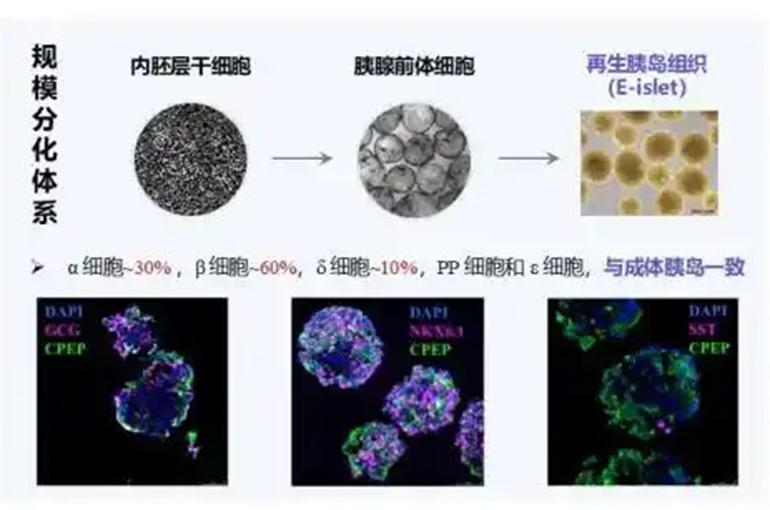
To address the issue of donor availability for pancreas transplantation, the team developed a technique for the in vitro reconstruction of islets based on endodermal stem cells. They also created E-islet, an artificial islet injection solution that can be administered via the portal vein to transplant the regenerated islets into patients.
E-islet was approved for clinical trials in China in April last year and in the United States this January, the report said. The tests are being conducted in an orderly manner, and progress is smooth.
Editor: Martin Kadiev