



 Huawei, Honor, Other Chinese Smartphone Makers Hike Prices by Up to 20% as Memory Costs Soar
(Yicai) Sept. 1 -- Huawei Technologies, Honor and other Chinese mobile phone manufacturers have hiked prices by up to 20 percent starting today amid surging memory chip costs, with increases of as much as CNY1,000 (USD148) per device.
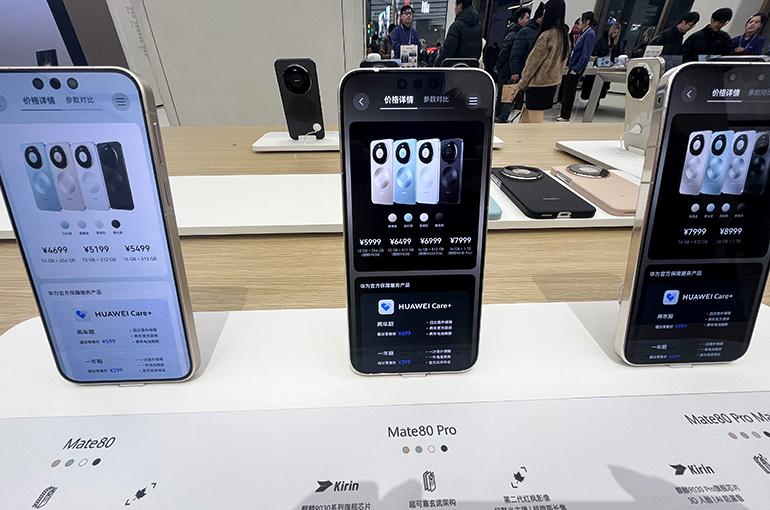
Huawei's e-commerce platform VMALL shows that all versions of the Mate 80 have risen by CNY800 (USD119), which represents an increase ranging from 11 percent to 17 percent. Meanwhile, all versions of the mid-range Enjoy 90 Pro Max have seen a price hike of CNY200, or between 8 percent and 10 percent.
Honor has raised the prices of the two available versions of its Power 2 series by CNY500 (USD74) and CNY600, bringing their prices to CNY3,199 (USD476) and CNY3,599, respectively, which represent increases of approximately 19 percent and 20 percent. Prices for the flagship Magic 8 series have risen by about 5 percent to 12 percent, depending on the model.
A smartphone distribution manager told Yicai that the latest price increases are being implemented online first, with brick-and-mortar retailers expected to follow gradually.
At the beginning of last month, Xiaomi hiked the price of several models in its Xiaomi 17, REDMI K90 and Turbo 5 series. Some products were subject to another price increase on Sept. 1, further expanding their cumulative price increase over the past two months.
The industry-wide price hikes are primarily being driven by an explosive increase in the price of memory chips.
Smartphone memory prices soared more than 80 percent in the second quarter from the previous quarter, greatly raising bill-of-materials costs and fundamentally altering the industry’s cost structure, according to memory-price tracking data from Chinese technology market intelligence firm Counterpoint Research.
Top-of-the-line 2-nanometer smartphone Systems-on-a-Chip due to be released in the second half of this year will be significantly more expensive than last year's N3P process flagship SoCs, Shenghao Bai, a senior analyst at Hong Kong-based Counterpoint, told Yicai. As a result, Android advanced models are likely to continue facing upward price pressure in the second half as higher costs for both flagship SoCs and memory push up manufacturing costs.
To control costs, mobile phone makers are also likely to streamline their product lines and may even suspend or delay the launches of some advanced models, Bai said.
He added that manufacturers will continue to diversify their supply chains. In the short term, developing in-house chips for specific functions, such as charging management and image processing, is feasible. However, developing high-end SoCs in-house remains extremely difficult and is unlikely to offset the higher cost of purchasing premium chips.
Industry estimates suggest that even if handset prices continue to rise, overall gross margins for flagship smartphones this year will still be lower than in the same period last year.
Editor: Kim Taylor





