



 Liberal Regulation Is Cutting Profits at Parallel Car Importers, Insider Says
(Yicai Global) Dec. 21 -- Lax government restrictions over parallel imported cars are causing intense competition and slashing industry profits, and some businesses are suffering losses from fluctuating exchange rates, the president of a trading company in Guangdong province told Yicai Global.
"The parallel imported car sector is no longer a lucrative business," the executive said. "We can only solve this problem by increasing import volumes." The typical profit earned from selling a Toyota car can be as low as CNY3,000 (USD455), but this can be a loss in real terms due to exchange rates, he added.
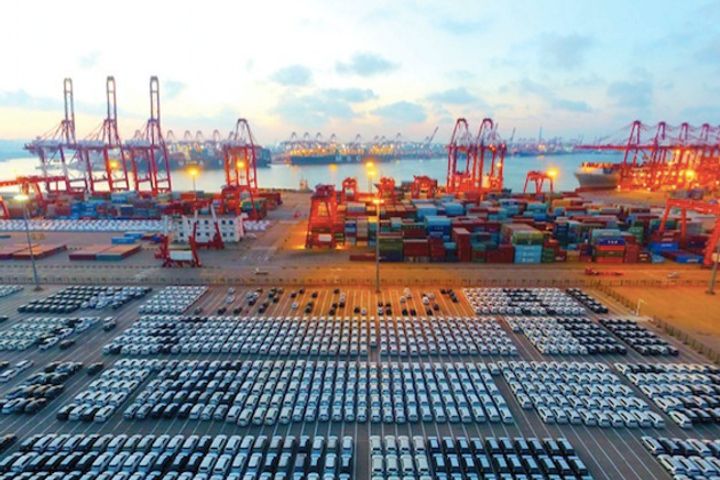
Parallel imported cars are those which non-authorized traders buy from overseas markets, though the vehicles all meet Chinese requirements for automobile sales. The cars used to be about 15 to 20 percent cheaper the same models at authorized dealers when parallel importing first took off, after a trial in Shanghai Free Trade Zone in 2015.
The number of parallel imported cars rose 46.5 percent on the year to 139,000 in the first 10 months, data from the China Automobile Dealers Association shows, making up 14.2 percent of all imported cars. Parallel imports made up 10.6 percent of vehicle imports in 2015.
While cheaper to buy, parallel imported cars face a number of problems, including poor aftersales service. A major issue for importers is the need to bear discrepancies in exchange rates.
Aftersales service
One Kunming-based trading firm has sold nearly 1,000 parallel imported cars this year, but still has no idea how much profit it has made, said Jiang Wei, director.
Automobile standards in China differ from those in the US, Europe and Middle East, so importers need to modify cars to ensure they meet requirements in China, which can void their warranty.
"The one who issues the invoice is the responsible party," Jiang said. This means importers need to build their own repair facilities and partner with insurance companies to offer warranties on parallel imported cars. The warranties are on par with normal vehicle sales in China, covering three years or 60,000 kilometers, but consumers will need to pay for it themselves.
"Our buyers often don't understand why they have to pay the additional fee," Jiang added. "In order to sell the warranties, we promise to provide free maintenance four or five times. We not only sell cars, we also provide aftersales services, like license plates and inspections, to ease customer concern."
Exchange rate and supply risks
Warranty issues aside, parallel import dealers still assume exchange rate-related risks and can be hit by restrictions on vehicle exports.
It generally takes a month to transport a car to China, said a trader surnamed Zheng, who wholesale parallel imports cars. Add 10 days for customs declaration and it can take about 45 days to complete the trade, leaving a large window for exchange rates to impact the importer.
"There are few entry barriers to the sector, competition has become increasingly fierce as the prices of cars in overseas markets are pretty transparent," Zheng said. "If we buy products when the exchange rate is high, we'll suffer a loss if the rate drops before we sell."
Foreign manufacturers are not keen on parallel imports. They usually limit export quotas to China from overseas dealers. "For instance, if Land Rover China complains to company headquarters that the Middle East division is exporting large quantities of vehicles to China, head office will prevent the Middle East unit from shipping too many cars to China," Zheng added.
Parallel imported cars are also rarely baseline models. Importers need to ensure that the vehicle the distributor sends to China matches the order exactly, to ensure paying over the odds for a car that doesn't meet the desired specification.
In order to combat these issues, Zheng is looking into expanding the range of vehicles he imports to include low-end cars, rather than medium and high-end brands, such as Land Rover, Mercedes-Benz, BMW and Toyota.
However, this approach will lead to intensified competition as domestic manufacturers look to play ball and prices fall across the board.





