



 China’s Core City Property Markets Warm Further in May Even as Luxury Segment Starts to Cool
(Yicai) June 15 -- China’s core city property markets extended their recovery last month, with several seeing the number of pre-owned home sales reach the highest in nearly three years, even as the luxury segment showed signs of cooling.
Second-hand home transactions by area in 20 key Chinese cities rose 18 percent from a year earlier to 16.7 million square meters in May, bringing the total for the first five months of the year to 76.9 million sqm, up 12 percent year on year, according to data from China Real Estate Information Corporation.
Chengdu’s pre-owned home sales by area jumped 33 percent to 2.14 million sqm last month, while Shanghai posted a 21 percent increase to 1.97 million sqm, CRIC data also showed. Beijing, Guangzhou, Tianjin, Wuhan and Xi’an all had transaction volumes of more than 1 million sqm.
New home sales in 50 key cities slid 2 percent to 13.6 million sqm, though transactions in first-tier cities rose 6 percent to 2.15 million sqm, according to the data. In major second-tier cities, new home sales fell 8 percent to 7.6 million sqm.
Land sales in the 50 cities stood at 4.2 million sqm, down 22 percent, per the data. First-tier cities saw a sharp rebound, with residential land transaction by area surging 58 percent and their sales revenue climbing 33 percent.
Premium plots in core second-tier cities such as Hangzhou, Suzhou, and Nanjing were especially sought after, with the average premium exceeding 30 percent.
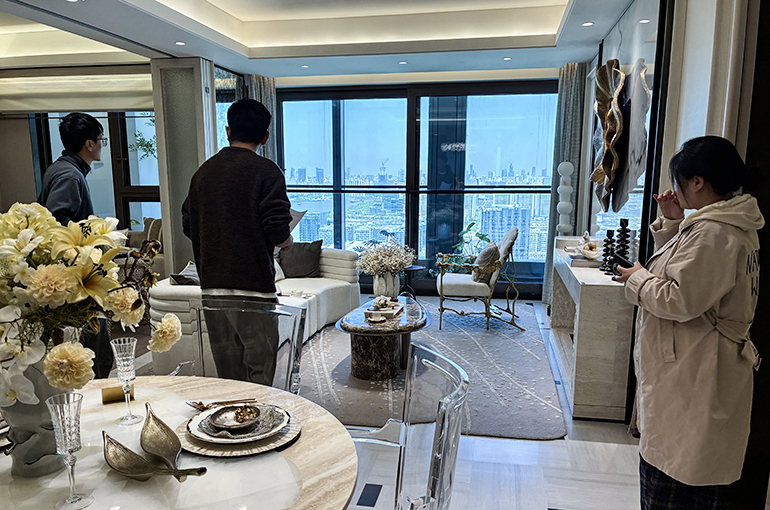
The luxury home segment cooled a bit, with sales of properties priced above CNY10 million (USD1.5 million) in 30 key cities totaling 13,986 in the first five months, down 19 percent, according to CRIC. New-build sales in those same cities fell 15 percent.
In Hangzhou, for instance, the first units at three high-end projects sold at an absorption rate of at least 92 percent in April, with one project selling out on launch. But the second batch, offered in May, saw absorption rates fall to between 85 percent and 94 percent, suggesting a modest easing in buyer conversion.
Because of earlier policy restrictions, the supply of premium housing has been relatively limited, making it one of the most sought-after segments in core urban markets, Yang Kewei, deputy general manager of CRIC’s Purui Intelligent Research Center, told Yicai.
But with policies now easing, supply is expected to rise, while pent-up demand is gradually being absorbed, alleviating the supply shortage, Yang said.
As more land for up-market developments moves through the pipeline, several major cities are likely to see a substantial increase in luxury homes supply over the next two years, ratcheting up competition in the segment, Yang said. Projects with weak positioning, limited product appeal, or overly aggressive pricing may struggle to sell, he added.
Editors: Tang Shihua, Futura Costaglione





