



 China Has Over 43,000 Smart Factories, Think Tank Says
(Yicai) Feb. 13 -- China has more than 43,000 smart factories, including over 35,000 at the basic automation level and over 8,000 at higher levels, which serve as a hub for the integration of scientific and industrial innovation, according to a new think tank report.
Of the higher-level smart factories, 15 are classified as pioneer, more than 500 as excellent, and the rest as advanced, according to the Annual Development Report on Smart Factories recently published by the China Academy of Information and Communications Technology. The report outlines the current state of smart factory development in China and forecasts future trends.
Smart factories at all levels now cover more than 90 percent of major manufacturing industries, with excellence-level plants spanning 34 categories, the report said, adding that in sectors such as petroleum and chemicals, electrical machinery, and steel and non-ferrous metals, excellence-level facilities exceed 32 percent.
The largest concentration of excellence-level smart plants can be found in Jiangsu province with 67, followed by Shandong province with 49, Zhejiang province with 38, Shanghai with 28, and Hubei province with 24, according to the report. These five also have two pioneer-level plants each, the highest number nationwide.
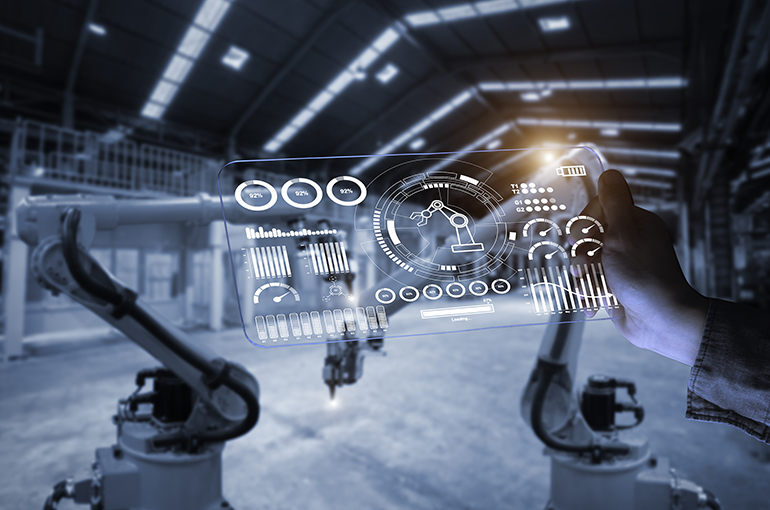
Smart factories integrate advanced manufacturing equipment with industrial software systems to connect machinery and information platforms, optimizing the entire product lifecycle, manufacturing processes, and supply chains, thereby substantially boosting operational efficiency.
Under the ministry’s classification standards, pioneer-level smart factories achieve 100 percent numerical control and equipment connectivity in key production processes, with the use of artificial intelligence accounting for at least 60 percent of operations. Their smart manufacturing model is considered globally leading.
Excellence-level factories meet slightly lower technical thresholds and are regarded as nationally leading in intelligent manufacturing.
Advanced-level smart plants achieve intelligent production in key manufacturing stages, while their basic-level counterparts have automated key production processes and digitalized production and business management systems.
The CAICT is a think tank under the Ministry of Industry and Information Technology.
Editors: Tang Shihua, Martin Kadiev





