



 New Generation Is Transforming China's Family Businesses
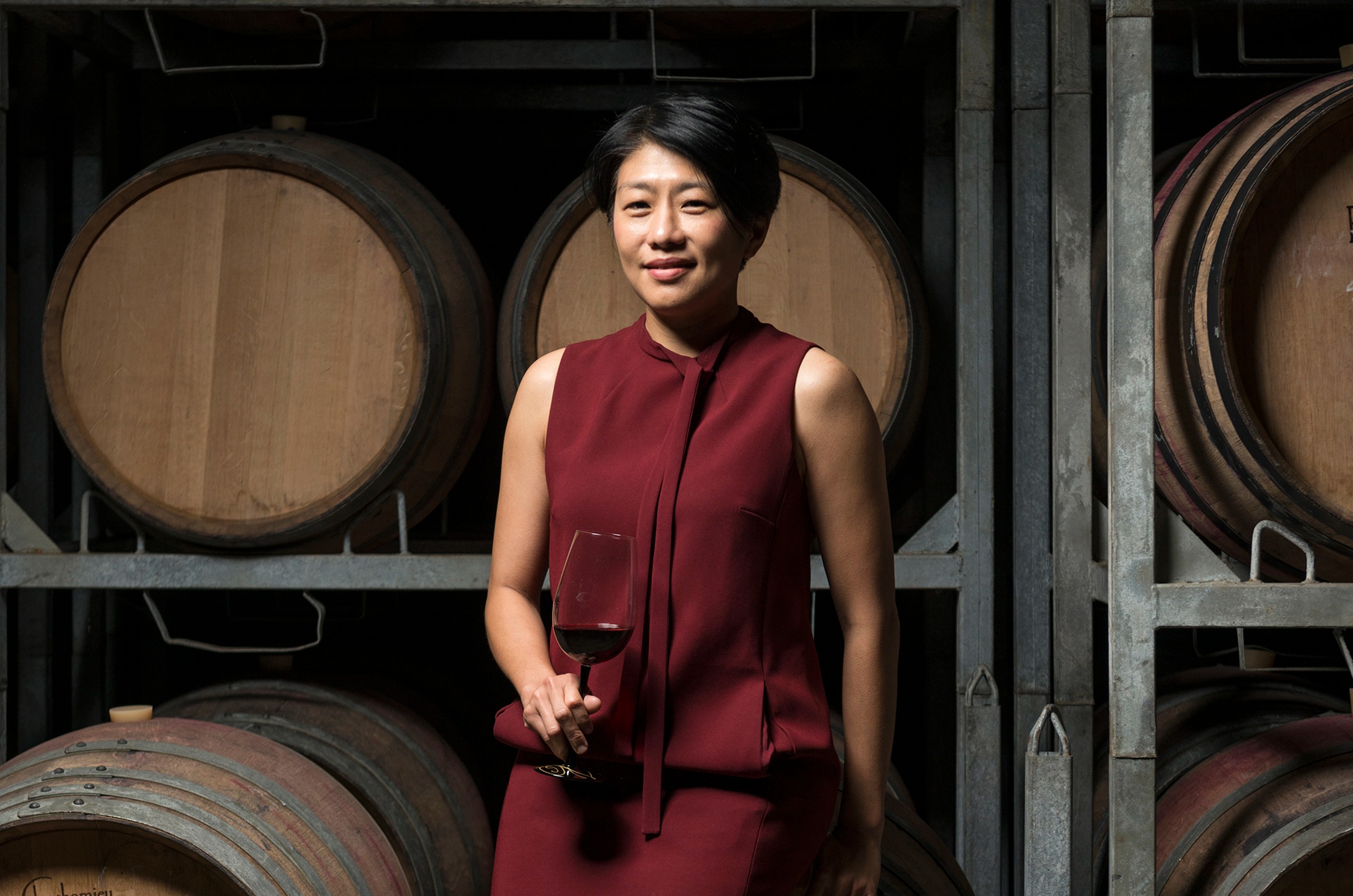
(Yicai) Sept. 18 -- Judy Chan joined her family's business in 2002 at the age of 24, when her father asked her over dinner whether she wanted to take charge of bottling and packaging at his wine company despite her having just started work at US investment bank Goldman Sachs and not knowing anything about what type of business he was running, as she had never even seen him drink wine.
More than two decades later, Chan has turned the business into one of China's better-known boutique wineries, Grace Vineyard in Shanxi province. The company has expanded into whisky production in her ancestral Fujian province and has brought in an outside majority shareholder.
Chan's experience is part of a broader generational transition in Chinese family businesses, many of which were founded during the reform era of the 1980s and 1990s and are now being passed to a new generation for the first time, inheriting capital but facing a different market environment than their parents.
Succession involves more than transferring ownership - it requires a commitment to intergenerational stewardship, Chan and several family business figures said in interviews with Yicai. It can also involve changes in decision-making, risk tolerance, and the role family capital plays across generations, they pointed out.
Founders who built businesses during periods of rapid economic growth often maintained centralized control, an approach that can create challenges when responsibility is transferred to the next generation.
"Founders who can manage thousands of employees sometimes find it challenging to manage family dynamics," said Zhang Yong, founder and chairman of Deyu Family Office.

What matters is not this year's profit but "whether what I leave the next generation strengthens or burdens them," said Bernard Chan, chairman of Asia Financial Holdings, adding that this includes not only financial assets but also organizational practices and unresolved risks.
Judy Chan said her father took a relatively hands-off approach when she moved into the business, often advising her to use her university degree and not make a mistake she cannot undo. She recalled deciding whether to import French bottles at 10 times the price of domestic ones, not knowing whether the potential effect on product and sales could justify the higher cost. "Making the call is genuinely difficult as you don't know if turning left or right is correct. Both are possible."
Chavalit Frederick Tsao, chairman of four-generation multinational firm TPC (Tsao Pao Chee), said that his children were raised overseas, but the family's values could still be passed on. "What matters is whether you've actually lived out the values yourself. Explaining doesn't work, but demonstrating does."
Formal education increasingly transmits knowledge that artificial intelligence can replicate certain types of knowledge, while values, judgment, and restraint depend more on personal experience and example, Tsao stressed.
Different Market for the Next Generation
Many Chinese businesses established during the 1980s and 1990s expanded into multiple sectors as new opportunities emerged, including coal exports, department stores, and wastewater treatment.
The environment facing younger business operators is different, Chan said. "The environment facing younger business operators is different, with a more competitive landscape."
For example, China's wine sector has grown from a few dozen recognizable domestic labels to more than 1,000 competing brands, she pointed out, noting that the market is also no longer expanding at the pace seen in earlier years. The change has meant placing greater emphasis on cost control and cash flow, with Grace Vineyard maintaining a policy of not extending credit terms to buyers, she said.
"The day cash isn't in the bank, sales are notional, and chasing payment consumes disproportionate time," she stressed. Grace Vineyard has also shifted some attention from wholesale channels toward direct-to-consumer experiences at its winery.
In an AI-enabled business environment, companies can increasingly operate with "low organizational density but high individual leverage," with smaller teams using technology to achieve tasks that previously required larger workforces, enabling more agile operations, said Johnny Zou, founder of Honghub, China’s first accelerator community dedicated to “one-person companies”.
Turning Purpose Into Capital Structure
Terms such as "patient capital," "regenerative capital," and "love as infrastructure" have featured prominently at family capital gatherings this year. Some participants have also sought to translate these ideas into specific financing models.
Asked whether values-based investing is too abstract to understand, Chairman Tsao said that Chinese philosophical traditions should be understood as a practical "discipline of living" rather than as ideas separate from everyday action. He outlined a potential financing model for ocean and climate restoration projects, where funding needs can reach trillions of dollars a year and commercial returns may initially be limited.
Philanthropic capital can provide early funding and absorb higher risks while projects develop their initial business models. Once a model shows returns of around 7 percent, impact-investment funds can participate. As projects scale and returns move into double digits, private equity and eventually larger institutional investors may become potential sources of capital.
Green investment can be linked to commercial value when a company addresses a specific customer need, according to Zhang Guojin, co-founder of Asia Green Fund and CEO of Asia Green Fund Management. For example, the products of a reusable-packaging company lowered customers' logistics costs while also reducing material waste, he added.
"Purpose should be a source of returns, not something balanced against them," Zhang stressed.
People in their twenties and thirties can focus on "financial ambition," while by their forties they can begin establishing "moral ambition," rather than waiting until later in life to consider how they want to contribute to society, James Chen, chairman of the Chen Yet-Sen Family Foundation.
Ownership Without Inheritance
For many family businesses, maintaining family ownership has traditionally been an important part of succession, but Chan took a different approach at Grace Vineyard, reducing her stake and bringing in an outside majority shareholder while remaining involved in product and brand development.
"People ask if I intend to hand this to my children. I never thought of it that way," she said. "I'd like the brand to survive, for people to remember what we built. That, to me, is what matters most."
A separate project has also connected Chan's business activities with her family history. She built a whisky distillery in Fujian's Longyan, a region her grandfather and great-grandfather left as teenagers when they emigrated to Southeast Asia, holding the groundbreaking ceremony on her grandfather's birthday.
Whisky requires years of aging before it can be sold, giving the project a long production cycle, Chan pointed out, noting that the process reflects her family history that spans several generations, from migration to Southeast Asia to winemaking in Shanxi and, eventually, whisky production in Fujian.
Finding Common Ground
Patience emerged as one recurring theme in discussions of family business succession and long-term investment.
"You can't force time," Chan said, recalling her early desire to master legal, negotiation, and other business skills as quickly as possible. "Looking back, moving slowly usually gets you further than trying to leap ahead. Give yourself time and give your parents some too."
For Chinese family businesses entering a new phase of succession, the transition may involve more than preserving an existing business model or transferring ownership from one generation to another due to changing markets and technologies reshaping how companies are organized and run. The next generation is also deciding how to manage capital, define ownership, and determine which aspects of a family business to carry forward.
Editor: Martin Kadiev





