



 Chinese Regions Gear Up for 2026 Consumer Trade-In Program Covering Cars, Appliances and More
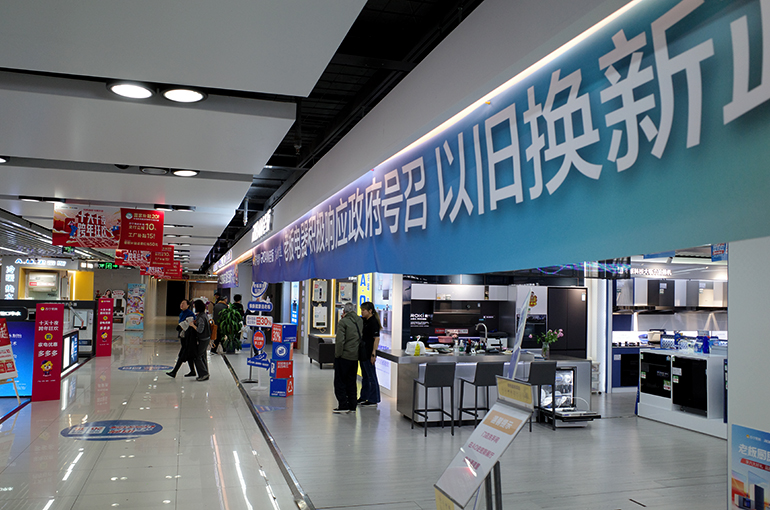
(Yicai) Dec. 24 -- Across China, many regions have already begun selecting subsidy platforms and participating companies in preparation for next year’s consumer goods trade-in scheme which will apply to a wide range of sectors from automobiles and home appliances to digital products.
Cities including Shenzhen have begun recruiting service providers for next year’s vehicle trade-ins who are expected to offer end-to-end support across key areas, including eligibility checks, fund management and risk control.
The Commerce Bureau of Ulanqab in the Inner Mongolia Autonomous Region is recruiting participants for its 2026 trade-in program for home appliances and the purchase of new digital products, it said on Dec. 22. Applicants must be able to handle sales, recycling, after-sales services and prepayments. They are also required to connect with payment platforms to verify eligibility and process subsidy claims, to keep complete sales and recycling records to ensure traceability, and to accept full supervision from finance, business, auditing and other related departments.
Many regions are also tightening entry requirements and strengthening oversight of the whole process. For example, service providers are now required to step up their monitoring and handling of risks such as online fraud, fake systems and abnormal declarations.
These measures directly address previously exposed regulatory loopholes. Audit results from several regions for 2024 show problems with some trade-in programs such as lax reviews and improper subsidy payouts. In one case, 50 new-energy buses in Beijing mistakenly received CNY4 million (USD570,000) in subsidies. There have also been instances of scalpers reselling subsidies and other forms of illicit profit-making.
This year, China allocated CNY300 billion (USD42.7 billion) in ultra-long-term special treasury bonds to support the trade-in program, covering five main areas, namely automobiles, home appliances, digital products, home decorations and kitchenware as well as electric bicycles. As of November, the policy had driven more than CNY2.5 trillion (USD356.5 billion) in related sales benefiting over 360 million consumers.
Editor: Kim Taylor





