



![[Opinion] 2026: The Dawn of AI-Driven Drug Development](https://img.yicaiglobal.com/src/image/2026/01/109729906595525.jpg) [Opinion] 2026: The Dawn of AI-Driven Drug Development
[Opinion] 2026: The Dawn of AI-Driven Drug Development(Yicai) Jan. 23 -- The next big leap for artificial intelligence in healthcare is no longer in the lab, but in clinical trials -- where drug development succeeds or fails.
For years, the conversation around AI in healthcare has been dominated by the “front end” of the pipeline: drug discovery. The industry celebrated algorithms’ ability to predict protein structures and identify novel molecules. However, as the 44th Annual J.P. Morgan Healthcare Conference (JPM 2026) made clear in San Francisco last week, attention is finally shifting toward what many see as the “last untouched bottleneck” -- clinical trials.
As the industry moves into 2026 and beyond, it is confronting a “Tale of Two Exponentials” that will help determine the future of human health.
Harnessing Moore to Combat Eroom
The technology industry derives much of its power from Moore’s Law -- the decades-long trend of exponentially increasing computing capability while reducing costs roughly every two years. Today’s computers are about 1,000 times more powerful than those a decade ago and nearly a million times more powerful than those from 20 years ago. This dramatic growth is what allowed software to “eat the world.”
By contrast, drug design and healthcare delivery operate under Eroom’s Law -- Moore spelled backward. These sectors have experienced decades of rising costs, now reaching extreme levels, with healthcare spending approaching a quarter of US gross domestic product. Driven by rising labor, administrative, and clinical trial expenses, therapeutics are following the wrong curve.
The inflation-adjusted cost of developing a new drug now doubles roughly every nine years. To reverse this trend, the industry must shift from Eroom’s Law to Moore’s Law by turning human-driven services into compute -- commoditizing complex clinical services through technology.
Oncology: The AI Testing Ground
Oncology remains the clearest frontier for this transformation, accounting for one in three pharmaceutical AI business relationships among top-tier players. The sheer volume of high-quality data and the inherent complexity of cancer biology make oncology an ideal environment for AI applications.
At JPM 2026, this momentum moved beyond theory into industrial-scale infrastructure. A landmark signal was the USD1 billion co-innovation lab announced by Nvidia and Eli Lilly. The partnership aims to create a “continuous learning system” that connects agentic wet labs with computational dry labs around the clock.
This follows a major wave of investment in 2025, including:
Cracking the Clinical Development Bottleneck
The pharmaceutical industry faces a roughly 90 percent failure rate for drug candidates entering clinical trials. Since research and development expenses account for as much as 70 percent of total costs due to project termination, this stage has become the primary target for AI-driven improvement.
The most transformative development heading into 2026 is the adoption of agentic AI. A new “Moore’s Law for AI agents” has emerged: the length of tasks that AI systems can autonomously complete is doubling every seven months. While early models could manage tasks lasting seconds, 2026-era agents are now capable of handling multi-hour professional projects.
Innovative players are deploying specialized tools to address this “messy middle” of development:
The Collaborative Ecosystem and the Global Bridge
Success increasingly depends on deep collaboration among biopharma companies, specialized technology firms, and hospital systems such as Mass General Brigham. Internal-only AI development is constrained by limited and siloed data, while advanced algorithms perform best when trained across broader, more diverse datasets.
In this global market, AI is also reinforcing the “China-global” bridge. China-based innovators such as RemeGen -- which recently signed a USD5.6 billion licensing agreement with AbbVie -- are combining robust local clinical pipelines with AI-powered evidence platforms that meet global standards.
Future Trends: 2026 and Beyond
The period of “AI disillusionment” is drawing to a close as the industry applies the right tools to the right problems. The impact is already visible in key metrics:
To succeed in this environment, organizations must strengthen data governance and cultivate a workforce that treats AI as a primary accelerator. The objective is a future in which the path from the laboratory to the patient is no longer a bottleneck, but a streamlined highway driven by intelligent, evidence-based systems.
(Xiaomai Zhang is the Chief Marketing Officer of HopeAI. Tanja Obradovic is the Executive Medical Consultant at Arc Nouvel and an Oncology Medical Strategy Advisor to HopeAI.)
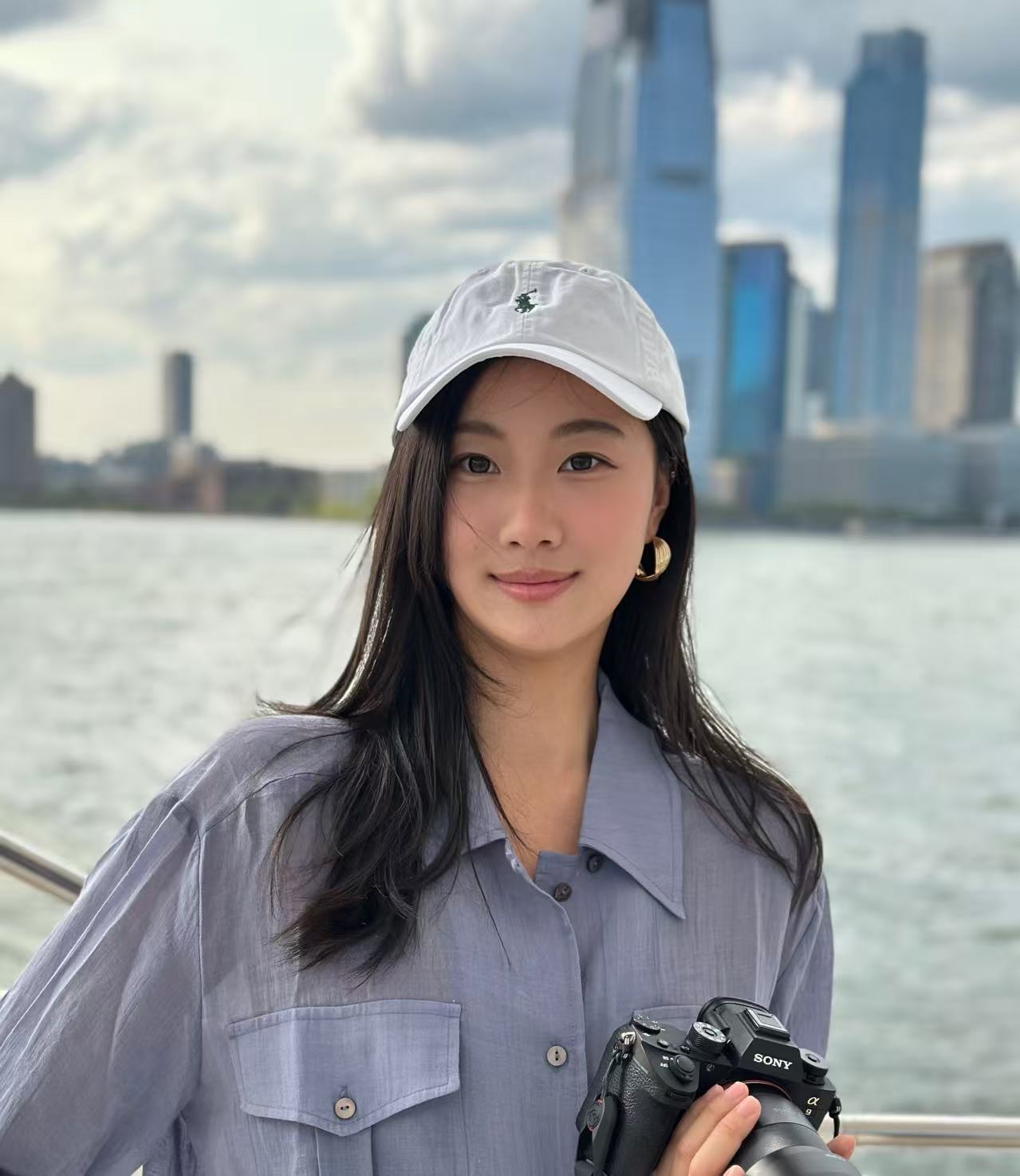 Zhang XiaomaiChief Marketing Officer of HopeAI. Xiaomai Zhang is the host of HopeTalk and leads global marketing, brand strategy, and industry positioning at HopeAI.
 Tanja ObradovicOncology Medical Strategy Advisor at HopeAI. Dr. Tanja Obradovic is an oncology drug development expert with over twenty years of experience transforming cancer therapeutics from laboratory concepts to life-saving treatments for patients worldwide.




